Eye Seventy Five

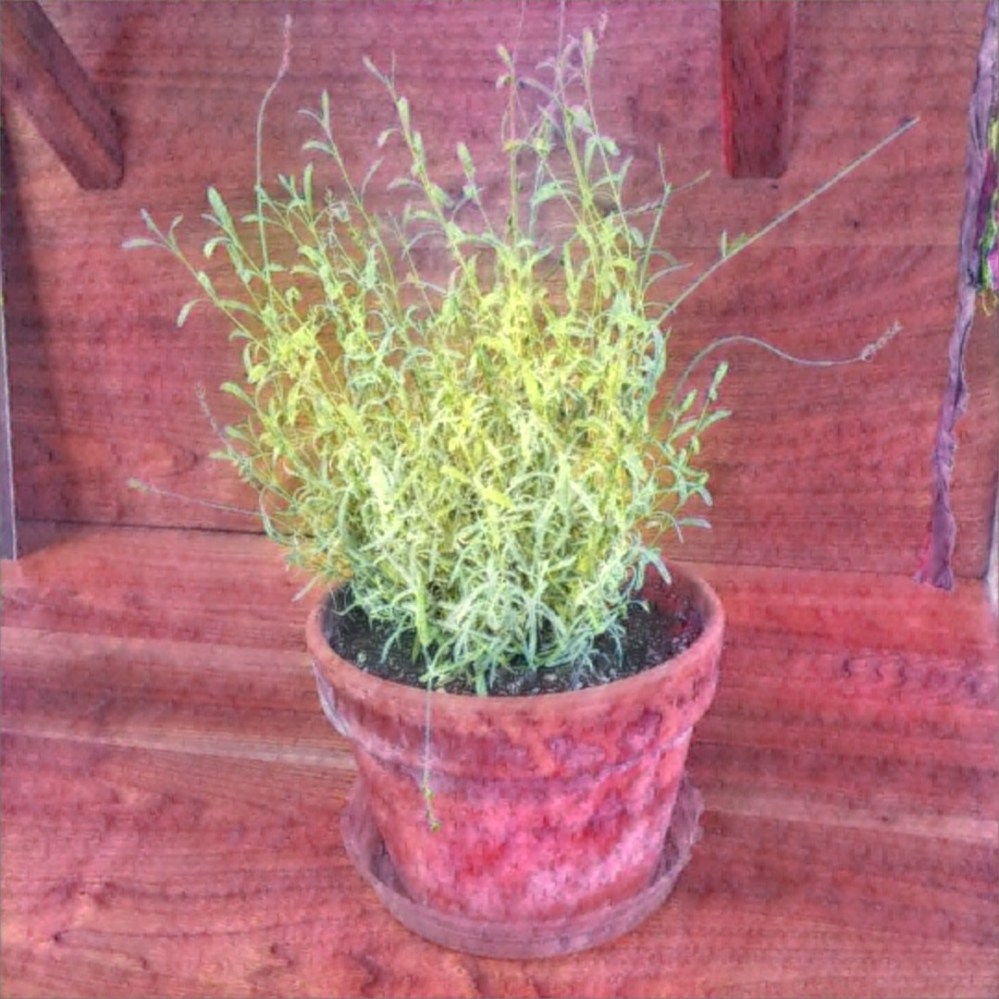
A potted plant with a leggy herb of some sort sitting on a potting bench.

She carefully took the paper out from the bottom of the secret shoebox. She handled it with care because she’d touched it many times. She was worried that it was becoming fragile. Sometimes she simply opened the box, moved aside the things on the top and caressed the parchment with her eyes. Just to make sure it was there. And to remind herself.

Other times, like today, she unfolded it. There were many folds and there was a specific order. She always enjoyed folding it back up. Matching the up grooves in the paper, seeing where the breaks were. Opening and closing when it didn’t line up right, triggering more study. It was a silly puzzle, but one that required just enough concentration to make it seem important.

Unfolding, on the other hand, now that was an exercise in revealing. The first open was like a book, really more like a pamphlet. Then she released it like an accordion, or, maybe, a fan. She used to pretend she was playing an instrument and pull the folds open and closed. She didn’t do that anymore. Mostly because the creases lost their spring over the years, and increasingly because she thought she should be more gentle.

After she spread out the panels, she unfolded it from the bottom, doubling the size in her hands. She could start to see markers appear. She unfurled another layer and it was spread out all in front of her.

She ran her finger along the long red line. There were other red lines that were parallel, others that crossed, but there was only one that followed from the top all the way to the bottom. From the beginning to the end.

She lived near the top of the line, relatively. One time she got very close to the top, crossing over the Mighty Mac for a family trip that began with such hope, as they always did, but ended in a worn down cottage and standard issue disappointment. The bridge was impressive, though. And a little scary.

But the most scary, and the most wondrous, was the endpoint of that long red line. One thousand, six-hundred and twenty-six miles away. But she only knew about 175 miles away, personally. The possibilities of more than a thousand miles away was exhilarating.

She only knew from TV. Palm trees. Alligators. Salt water. Hurricanes. Coconuts. Shrimp. Black beans and rice. Spices!(!) Waves. Rocks. Bright blue water with concrete pylons and a road connecting rocky islands.

She was from the world of cars, of motoring. And yet she took her beat-up green short bed truck only within a sixty-mile radius of her home.

When she took out her map, and opened it up, and laid it out, the entire world was in front of her. At least a world that was near the 1-75 corridor. That road that would take her to paradise.

She opened up the map and imagined her adventure. She swore she would take the road herself, one day. But she had to finish high school. She hoped to make it to the next stop, maybe along that corridor. She wanted to see a bigger world. That kept her in school. Kept her working to make some grades. Kept her from messing with the boys that called her cute, after they called someone else out.

She heard the argument getting louder downstairs. She very very carefully refolded her map. She put her dream back in the box under her bed. But in her head, she was trying to push the accelerator down with her right foot. As hard as she could.


Bully Pulpit

A school playground that looks inviting. And fun.

Kyle was the biggest kid in the school. The school itself was small, with just three groups, pre-school, pre-k and kindergarten. Pre-school was in the front room with the guinea pig named Piggy. Pre-k and kindergarten learned together in the next classroom over, on the other side of the kitchen where the littlest kids opened the huge refrigerator door to store their lunches.

Kyle was the oldest. He may have waited an extra year before enrolling, as was the fashion for boys then. Their parents thought it would give their sons, especially the ones younger or less mature, a better start.

Kyle definitely took advantage of his advantages. He was taller and stronger than the other kids. He was more coordinated. He had more words. And he was more aware of the way the world worked, or at least the ways he could work the world.

His mom and dad were full professors at the university. They were old parents with graying thinning hair, knees that sometimes popped and less patience. Their short patience span was manifest in letting Kyle be Kyle. They saw no reason to fully resist him. He could regularly wear them down without too much effort, so why not skip the struggle and just let him be? They were happiest when he was happy. Whether that was an occasional ice cream bar for breakfast, watching more TV than was allowed or skipping his bath some nights, they’d go along to get along.

The school was focused on letting the kids be kids. It wasn’t a free for all. No, not at all. The teachers and their assistants were well in control. They let the children lead their learning via their activities. This worried some parents. They wanted worksheets and homework so that their offspring would be “ready” for big-kid school. The faculty resisted. They guided lessons through the curiosity of the kids. The success of their approach was evidenced by ten years’ of kindergartners leaving their tutelage reading books. And asking wonderful questions. And taking responsibility for their learning.

The kids would make up their own games, build forts under blankets hung from cubbies and publish their own books with stapled spines. Sometimes, when the teachers weren’t looking, Kyle would walk by a classmate and push off of them with his hand. Or, you could say, he’d walk by and shove a kid. If there was any resistance, he would claim that he was misunderstood. If it was an extremely egregious hit, he would sheepishly apologize. His physical outbursts weren’t frequent.

More frequent were his exclusions. His parents thought that he was a natural leader. He would provide value–usually his attention–to some of the kids in order to isolate another. This was a rotating position, the one of outsider. One day you’d be out and the next day you would be part of the group barring someone else. It was fair, in a weird way. Except if you were Kyle, because you were never out. Kyle was always in. Everyone loved him, despite the hitting and despite the emotional manipulations. Kyle was the oldest and the biggest and the best.

There was at least one mother who noticed the dynamic. She noticed even before the day her pre-k son, a year or maybe two, younger than Kyle came home sad that he was sidelined. When her boy told her that he couldn’t play the game around the tree and that he felt left out, she felt left out, too.

“What stopped you from playing the game around the tree?”

“Kyle said that I couldn’t play.”

He needed some tools. They role played and practiced. Sometimes she was Kyle and sometimes he pretended to be Kyle. They sometimes played out their script in the car. There were no further incidents.

The mother brought him into school late one morning, after snack and before lunch. He had a doctor’s appointment. The school was adamant about taking the kids outside everyday, rain or shine, hot or cold, snow or wind, but today the downpour was too much. Some kids were playing “fort” near the cubbies. There were blocks stacked to protect from intruders. Her boy approached the “entrance” to the fort so he could drop off his backpack and hang his wet jacket in his cubby.

“Stop!” It was Kyle who stepped out from the group huddled in their “fort.”

“You aren’t in the club. You can’t come in here.”

The mother drew in a breath and felt her hand tighten on the handles of her satchel.

“Kyle, you aren’t the boss over me,” said her son, just like they had practiced. And he stepped over a block to his cubby.

Kyle didn’t miss a beat as he stepped aside. “You can be in the club.”

The boy hung up his coat and stepped back out of the fort. “No, I’m going to paint over there with Emily and Christine.” This second part was a freestyle. Not bad.

The mother’s heart was beating faster. First, because she was afraid, and now because she didn’t need to be. Her lesson was to let him find his own way with her guidance. Perhaps the school was teaching her as much as they were teaching him. They both had a lot to learn.

Boiling Points

A tea tin, filled with bags of tea. English breakfast.

He filled up the electric kettle with water to the half-mark. No reason to waste energy on boiling extra water. It doesn’t stay hot.

The kettle was a very good addition to the ridiculously small and poorly laid out kitchen. There was a general dislike of kitchen appliances. Among some. Okay, among one. He minded less than she. There was paltry counter space for starters. The kettle, however, was used at least once each day, and very frequently two or three times. It earned its real estate. Its place was in plain site.

They used to have a stovetop whistling tea kettle. That took over a burner for the first part of their marriage. They went through four or five. A few burned out. One wore out. Most lost their ability to whistle during their tenures.

While traveling, he stayed in an apartment with an electric kettle. It reminded him of an old girlfriend’s mother. She emigrated from England and brought her love for tea and the efficiency of her electric tea kettle. He missed the mother much more than the daughter. It’s like that when you get older. Old girlfriends hold less meaning than their families who embraced you as one of theirs. He saw the kettle and was immediately attracted to it. He thought about the flaky crust of the fruit pies that the mother used to make.

The following Christmas–as they did before, one year when they exchanged toasters and another with pillows–they bought each other an electric kettle. They both did research and came up with two different models. He either took one to work or returned it to the store. She didn’t remember, but was happy that they did not have two additional small kitchen appliances. One was likely too much, anyway. Except it wasn’t.

The kettle was remarkably fast. Much faster than the whistling stovetop type. Even the direct flame from the gas burner could not compete with the magical kettle. You would think that the warming up of the carafe would take a long time, but just 60 seconds after flipping the switch the water starts to hiss. The hiss drops a few octaves before hitting a silent lull while it gathers enough energy to burst through the surface of the water and burp the first gurgle of the boil. Click. It automatically shuts itself off. Perfect safety for a flaky family.

After the 4.5 minutes of boiling, there is 5 minutes of steeping.

There is a small, well-curated selections of tea. The herbal choices include pure chamomile, pure peppermint and usually one lemon mint or lemon hibiscus or some hippie flavor mix. The black teas normally included English and Irish breakfast teas–the English is richer and the Irish more flavorful. There might be loose Earl Gray and Darjeeling. And a jasmine green tea. He can’t drink tea that might keep him up at night. Caffeine has no power over her.

She likes her after dinner black tea with a little milk and a little sweetener. He drinks his herbal brew straight or, occasionally, with honey. Sometimes she nods off before she finishes her tea, with her fingers resting on the keyboard, neglecting her writing. And sometimes he nudges her to finish up, brush her teeth and come up to bed.

Dust to Dust

Three adorbs baby bunnies, brown, white and gray. They look very soft. And not dusty at all. Did you get that they are DUST BUNNIES? Alt text humor.

The light spills into the dining room from the middle window. It hits long and low at this time of year. It has an orange tint. And it’s moving.

The light isn’t solid, but it is full of tiny bits of dust that boil around in the stream. There isn’t actually a rhythm to the movement, but there is flow. The specks float in the sunlight. They come together and then, seemingly, repel each other. They float away to meet and then be repelled by a different, nearby dust speck.

An air current criss crosses the do-si-dos inside the beam. The draft air is cooler. Some of the dust tries to drop, but on the way down hits a hot spot and bounces back and rejoins the sun dance.

The strips of light have a terminal point at the opposite wall where another batch of dust lies. This dust is much more obvious than its hidden, moving in the light, cousins. The dust on the floor simply sits next to the wall, snuggled into a weave of dog hairs and punctuated by the crunch of some crumbs that were brushed off the table at breakfast.

A passerby disturbs the air, creating a breeze that makes the wall dust roll a little. Just a little. It mostly sits and waits to be joined by the dust that falls as the morning sun that held it up moves across the room and disappears. Some may join the dance if it’s sunny again tomorrow.

Realty Reality

This is SpongeBob Squarepants' house in Bikini Bottom. I wouldn't really want to live here.

Why the floor coverings, too? That was really close to the last straw.

They were using the famous local realtor. Great reputation for selling houses for big profit. Nobody talks about how bossy they are, though. It seemed they’re more concerned about maximizing their reputation. Like it would be beneath them if they sold your house for less than too much. Sure, they made more money at bigger sales, but it was more than that. They really stretched the seller. It’s like you worked for them.

When they originally bought the house, the fashion in real estate sales was a cleaned up front yard and a great new door–curb appeal! There were to be cookies taken out of the oven just before the open house to make the place smell homey. In lieu of baked cookies, the fallback was lighting some Yankee Candles with realtor scents like Vanilla Cinnamon Chocolate Chip Snickerdoodle or Clean Sheets with Baked Bread Breeze. But, that was then.

Now, it’s all less is more. Cold granite countertops with nary a fruit bowl, but an $80 flower arrangement is welcome and to be replaced every other day, no spent buds allowed. Also, no fabric–not even curtains–except on a well-styled bed with extra pillows that they pushed you to buy at Target. All to ensure a Marie Kondo/Tiny House minimalism aesthetic only achievable by monks or cartoonists. The latter because they can draw whatever reality they wish. Have you seen Sponge Bob’s house? They never have to figure out where something physically goes. They can simply use their eraser.

The famous realtors are monsters who do not have emotions. They have no empathy or human feelings for things like that mug you got from that conference ten years ago that turned into a great career move or those amazing Timon and Pumbaa life-sized cardboard cutouts from that special premiere screening that the kids got to see.

You were feeling tepid at best about this sale anyway. Your wife got the best job ever. It’s back where she grew up and close to grandparents. You? You can work from anywhere. Bonus, you can charge East Coast rates to clients from your Midwest address. The new house is two-thirds the price and two times the size of your city home. But you would be very happy to stay where you are.

Especially today. When they are coming by with the cameras for the house hunting website and just before the open house next Sunday. Those demon realtors made you invest almost two thousand dollars in fixes and upgrades and cleaning and painting to prep for the sale. Intellectually you agreed that it would pay for itself, but your heart objected to the cleansing of your lives from this house that was a home that knew all of your secrets. All of them.

You felt it the most most, or maybe with finality, when they insisted on pulling up the rugs, to fully expose the wood floors that you had waxed, also at the behest of the brutes. The selling strategy was to open up the rooms visually by removing the clutter of patterns of flowers or geometry on woven wool with a fringe–especially the small section of fringe on the dining room rug that the puppy destroyed. The puppy that grew to that great, fat old dog that you and the girls sent over the rainbow bridge last year. You were saddened especially when you rolled up the rug from the middle bedroom that still bore the faded evidence of  a child’s experiment with dye gone awry.

As you walked down the wooden steps and through the dining room to the front door you felt the hollow echoes of your squared heels hitting the shiny floors, making a sound that hit the bare walls where the mis-framed grade school art hung until last week. You looked around at the emptiness of a house that was overflowed with family and was now stripped to an empty canvas for someone else to color.

You walked out the front door obsessing about the carpets in storage and trying to imagine them in a new house. Really, a new home.

Dub Squad

Empty swings in the schoolyard. At least it's a sunny morning.

Zoe had been hoping that her orthodontist appointment would last longer. Or that it would start late. Or that the dentist office would catch fire. Anything to delay or, even better, avoid going to school. Mom wasn’t having any of it.

But Mom was being selfish. Said she had to get back to work. Zoe felt very strongly that it would be better if they had lunch together, then maybe go shopping. She made her case smartly and forcefully. Mom was having none of it. Stupid office.

Things didn’t go so well at the end of yesterday. Somehow the day got out of hand. It was that idiot project. She was working with Emily and Emma, like they almost always did. They were all in the gifted and talented program. They were all in the orchestra. She and Emily played flute. Emma played the violin. They were all on the same soccer team. Emily’s dad coached. They were called the Purple Reign because their uniforms were violet and they loved to sing “Let’s Go Crazy” on the sidelines. It psyched them up. They all had iPhones and sent each other the most hysterical emoji messages ever. Their moms couldn’t decipher their code.

They stopped singing the songs from Frozen this year. They switched over to binge watching The Hunger Games trilogy. Katniss was more relatable than the cartoon Elsa. The archer’s moodiness was more like they sometimes felt. Alone together. They were growing up.

Yesterday was ridiculous, though. They were close to being finished with their presentation. They worked in Justin Bieber’s Sorry from YouTube. The project was on language and the concept just worked. They agreed that the dancing would be a great way to finish off. Creativity points and maybe some cool points, too. Somehow, though, everything went south.

Emily started by saying that she didn’t think they should spend so much time with a dance video. It made them seem less serious. Zoe felt stung. She was working on their choreography. It was actually her major contribution. She made different signs for them to hold and swap as they were dancing. Using the classroom speakers and a YouTube video was uncharted for the students. She had to get Ms. Waldorf’s permission. Zoe explained how they were integrating a pop video into their research. She was pretty proud of her negotiating.

Before Zoe could respond, Emma piped in her agreement. She said it in a thoughtful way, like, “I hear what you’re saying, Emily. That makes sense.” But she said it as soon as Emily finished her sentence. As if they had discussed it before. Zoe felt a bitter taste in her mouth. She took a big breath through her nose. She blinked her eyes quickly to quell the rising salt water. She exhaled and then took another deep breath.

Emma’s left eye narrowed just a bit and the one side of her mouth turned down. She was thinking for real this time. “But maybe we can keep it and just only do it for half of the time.” It was Emily’s turn to stiffen a little.

“If you don’t want to do it, that’s fine,” Zoe said with a bit more force on the fine than she was intending.

“No, no, no. I’m okay with Emma’s idea. Let’s just cut the dancing short.”

There was a bit of shortness in Emily’s response. All three girls were feeling edgy. Zoe quickly packed her notebook and markers in her backpack. She put her half-eaten Lara Bar that fell out of it’s wrapper in there, too. She didn’t care that it would be gross. She was ready to go. She needed to go.

“Okay. I just remembered I needed to see Mr. Ripley. See you guys tomorrow.” She stood up and shook her stuff to the bottom of her bag, awkwardly zipping it as she walked away. She hoped that they didn’t see the back of her hand run across her eyes. Her last few steps out the door were a sprint.

She was quiet at dinner. She couldn’t stop replaying the conspiracy in her head. Why were they ganging up on her? They had been working on this plan for weeks and this was the first she heard about “too much music.” When she thought the words “too much music” she thought them in a sarcastic baby voice.

And this was after she cleared it with the teacher. After she made the signs. After she figured out how they would use them to “convey their educational messages in an authentic fashion to their peers.” Those words got her the approval. A flare of pride pushed away her gloom.

Were Emily and Emma mad at her? Did she do something to make them mad? Why were they rejecting her? She started to feel a tennis ball sized mass in the middle of her chest rise to the back of her throat. She swallowed it back down before it reached her eyes. Mom started to ask her something but her brother and his friend came home and the dog went off.

Zoe put her plate and silverware in the dishwasher and decided to call it a night. She walked upstairs. She stared at the foam from the toothpaste leaking from the edges of her mouth. Like a sad clown face. She felt a little sorry for the girl in the mirror. She downed a glass of water and watched a little water drip down her chin. It spotted her t-shirt. She pulled on her favorite nightshirt and curled in bed with an unopened book. She gazed absently at the ceiling, her hand resting on the cover of her book, her mind spinning through the end of the school day and cycling through emotions of confusion, anger, sadness and doubt.

Now she had to go back to school and she didn’t know if her friends were her friends. She made herself stop. Mom pulled in front of the school. If Zoe looked at her, she would have seen her mother’s head tilted to one side, studying her daughter with pronounced lines on her forehead. But Zoe had the car door slammed behind her–not slammed hard but with a little extra force–before her mother could finish her assessment.

Crap. It was lunchtime. Everyone would be in the cafeteria. She didn’t want to go in there, but after she checked in with the school secretary, she had no where else to go. She grabbed a tray and kept her head down as she approached the food kiosk.

She put her tray down on a table and felt someone sticking an earphone in her ear. She heard the tinny sound of a song. Emily was attached to the end of the white wire and held the other bud next to her own ear. She looked at Zoe all wild-eyed and crooned, “Is it too late now to say sorry?” Emma was horse stomping her right foot in rhythm to the song. She finished with her best Michael Jackson flourish, which meant she lost her balance. While she did stagger, she stayed standing. The three of them doubled over. Zoe’s snort was followed by another round of shrieks.

Those two Ems knew her well. And, they were exactly right about cutting some of the music at the end. In fact, all was right.

Bus Sketches

The aisle on an empty bus

The woman was filling the boxes of her crossword puzzle in the morning paper. In pen. She sat sideways as the bus pulled away from its bay. She turned to the woman next to her and offered her a sweet.

The woman shook her head, “no,” and politely smiled her “thank you.” She had a pleasant round face topped by a hat. The leopard trimmed brim was double accented by the fringes of her pageboy peaking out and framing her full cheeks. The weather flirted with cold and the forecast teased rain. The hat was both prophylactic and camouflage–protecting against a potential storm and masking her need to see her hairdresser. She pulled the cord, requesting the next stop.

The man facing front looked up as the woman with the hat pulled herself out of the seat. She led with her chest, almost like someone was pulling her up via a string attached to her breastbone. The man read the sign floating above the aisle. It said the name of the next stop. The woman with the puzzle asked him a question. It might have been about the news or about an event at her church. He responded in a way that was familiar, but when they got to the next stop, a silent woman who was seated next to him stood up, too. He gently guided her off of the bus that pulled away as they got on to their day.

Nobody Does Anything About the Weather

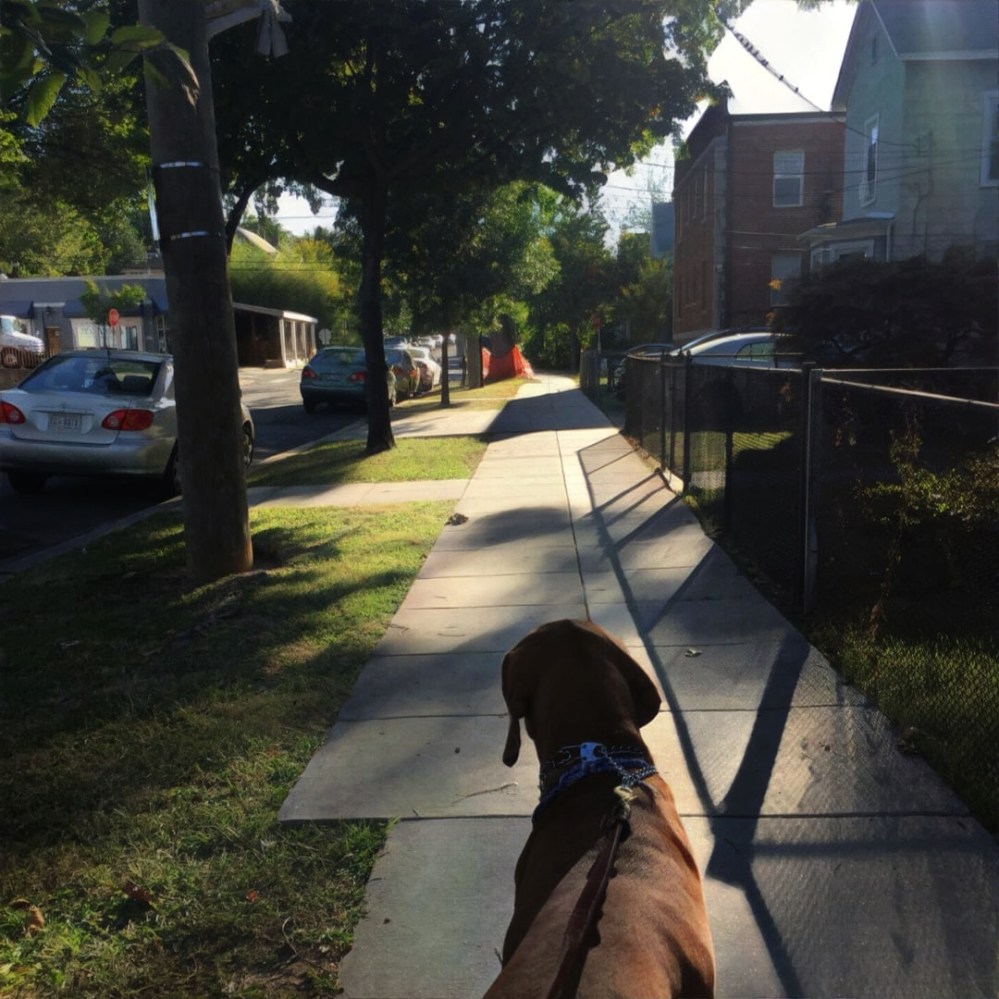
This was a stunning September morning. The Beast led the way.

Another conference call. This one was led off by somebody providing a weather report from the midwest. Turns out it was nice weather out there, and somehow this was weird but–not to worry strangers on the call–the weather will be bad. The report was apropos of nothing. An odd non sequitur. And not very interesting, bless her heart. I hate conference calls.

But before I get all superior, I have to ask, how many times have I written about the weather this year. Six times? Maybe ten? How many ways can I describe the change in weather? The heat? The cool? The sun filtering through the trees, making shadows on the sidewalk, sending up an artist’s palette of colors, warming the world?

How many times have I posted about my morning stroll? It’s always about the air–crisp, heavy, frigid, humid. It’s about the light, too–dark, bright, layered, orange or purple. There’s also storms–rain, snow or just wind–providing fodder for my daily struggle.

Is it enough that I tap into weather as a vehicle to practice descriptive writing? Is it better that I sometimes use the weather as a metaphor? Is it of value that I use the weather to transmit a small tale?

Have I committed the worst sin of writing? Am I boring you, my Loyal Reader?

I took on the challenge to write every day. I know that the quality is uneven. I recognize there’s more than a score, perhaps even four score, of less than stellar results. But dull?

Maybe I’ll just tune my point of view. Yes. I’m not delivering a weather report. I am describing the environment–how it looks and how it smells and how it feels and how it sounds. I am practicing using words to share details so you can imagine what I am thinking, so you have some context, and to bring us closer together.

This morning the shadows were longer and the air was cooler. I stepped onto the porch but kept my hand on the door handle to push it back open. I needed a little something.

I went to the hall closet and found my black hope and change hoodie. It’s eight years old now. It’s stretched out at the cuffs. The zipper catches on loose threads at the bottom and there are little holes in the left pocket, the one that holds the treats. I blame the Beast.

I pulled on the worn fleece, but didn’t zip it.

The leaves on the trees were still mostly green, but some had given up. The sidewalk was spotted with dry leaves. They skittered along the concrete until they crunched under paw or sneaker. Definitely a sign.

We’re on the cusp of the next season. But we’re not there, yet. Summer still has some breath left. She’s elbowing back and forth with Fall. Until Fall wins the match. I never did pack my sweaters away. Now it’s definitely too late.

Wake up, Loyal Reader, and thank you for your time. I do appreciate you.

Air Aria

A tree on 10th Street. There is a glass building behind it.

It almost sounded more like squeaking bedsprings than tweets and chirps. Except that there would have been an old time hospital ward full of beds, and those beds would need to be fully exerted in a most athletic fashion to create this level of racket.

Maybe the tree was a bird version of a packed convention center exhibit hall, the echoing din of vendor and vendee voices combining to fill the cavern. Except that the pitch was much higher and frequently punctuated. The noise didn’t grow to a generalized loud buzz. It didn’t fade into the background. It was scraped, like a metal rake on concrete, onto the air.

You couldn’t actually see the birds in the tree, but there were likely hundreds. It wasn’t as much that the tree was large–although it was–but that there were a lot of birds. Peering into the dark foliage you might think you could make out the movement of a bird, but it was as likely to be the movement of a leaf. Undoubtably disturbed by a camouflaged bird. Their shiny black eyes didn’t reflect any light and their beaks and wings melted into the evening shadow of the bounteous greenery.

Walking under the tree, people only thought about birds dropping. Not the birds themselves, you know. The gray sidewalk was splashed with white splatter shapes of guano. It wasn’t slick, but it looked it. Pedestrian heads ping-ponged between carefully looking up to avoid walking into dropping poop–carefully in that they didn’t want anything falling into their eyes–and looking  down at the ground to avoid a slip and a fall onto the fresh “paint.”

But it was the shrill turbulence of peeps and warbles, and the furious rustling of leaves and branches, that drew attention. And questions. Why that tree? Why so many birds? Why this evening?

As the walkers reached the second half of the block, they forgot that they had even wondered.


Ma-ma-ma-ma-ma My Verona!

Dirty sneakers, an eviscerated pig photo bombs.

Oh, most arrogant wretch.

Fie. Fie. Fie. Why do I deign to write? What conceit have I, that to put my counterfeit words next to royal scribes before and near me? Whose language I share, but in comparative use, I despair?

To spend evening past perched near the world’s stage, soul undone by the Bard’s poetry in the two hours’ traffic rage. I set my trespass on our shared language as I prate on.

Soft, soft. Anon I will publish this hopeless screed, awaiting the black emptiness, the complete loneliness of whispering into a void. And yet, still, I type. Perchance to dream.

Mark. I type for thee, Loyal Reader. Or if I would fain prove true, I, indeed, write for me.