Fooled Again

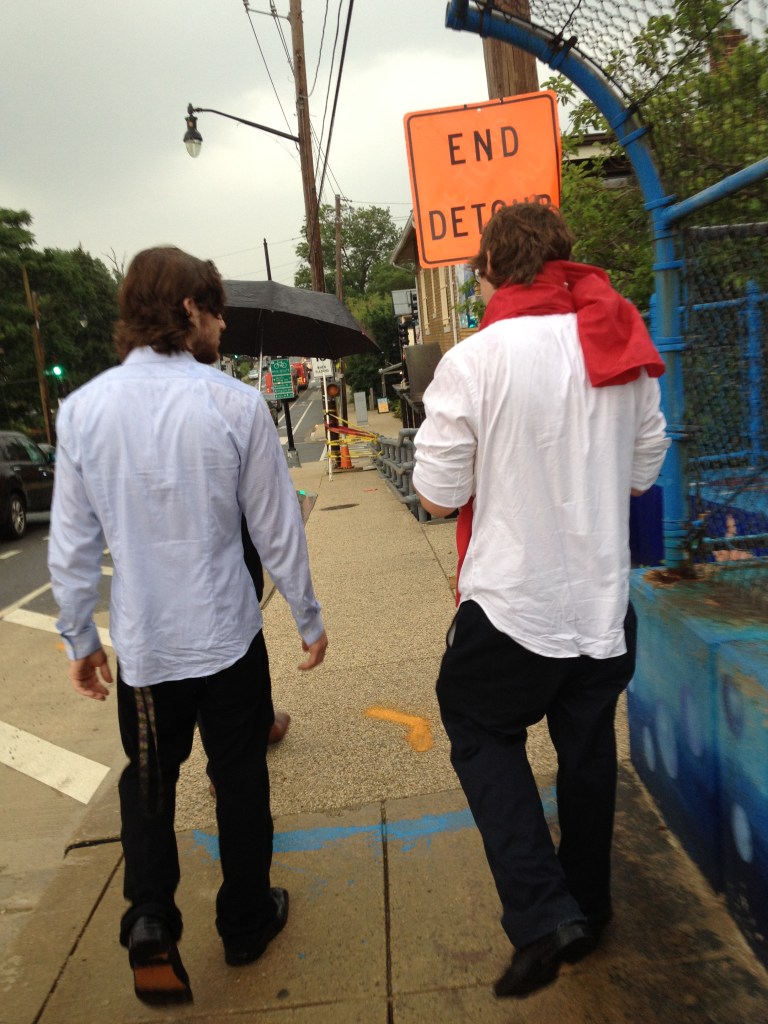
Walking down the street.

I jaywalked right in front of a cop.

As I was stepping up to the light, I saw the Crown Vic from the corner of my right eye. The cruiser slowly pulled to the middle of the empty block. Very empty in that the restaurant that used to anchor that space and eight or ten houses around that block were cleared away four years ago. The holding-out-for-more-compensation owners of 5 row houses on the east side of the block have been dooming the planned mixed-use development. That’s a different story. I’ll write that another time. But there is a big empty space.

MPD rolled up next to the tall metal construction fence sprouting from cement blocks. The fence ringed the big empty space now taken back by vines and weeds pushing through old foundations, around the trunks of once mighty trees and snaking through what had been an alley. It could use a mowing.

I watched as he pulled to the curb and parked. I realized he was active. But as I stood there on the corner watching 23 seconds counting down to my permission to cross and with no cars coming over the hill from the West and zero traffic approaching from the East, I lost any patience or law-abiding self-restraint. (The Spouse would have heartily disapproved.)

A car passed, the street was clear. I looked both ways. I started to cross. I was feeling a little cheeky since Johnny Blue was just a glance from that intersection. When I was halfway across the street, he slowly moved from his perch. I kept my eyes straight ahead and likely stood a little taller. I didn’t pick up my pace, too much. I thought that he was going to screech his siren and censure me. If I made eye contact, he’d for sure bust me.

He wasn’t coming for me, though.  He had likely been sitting there to check a text before driving around the block to check out the local reform school.

I stepped on the curb, and the police drove by. I didn’t look back. I had purposely flaunted the law, in front of an enforcer of the law. Somehow, in that minute, it seemed stupider to stand and wait 23 seconds than to tick off a cop. I contemplate that as I walk the next block. Is it okay to break that pedestrian law? I already made an excuse for myself, but wanted some absolution.

I criss-crossed from one corner to the next, and a hybrid SUV revved up behind me. It speeded to the stop sign with the radio blasting. As it slowed and rolled through the intersection I recognized the strains of The Who.

Meet the new boss. Same as the old boss.

I recognized the ghost of my youth granting me amnesty and egging me on. Privilege checked.

Valor in Discretion

question authority

When I was but a wisp of a person, maybe all of 116 pounds soaking wet while wearing a heavy wet towel, I had this shirt. It was a black tee. It was a present. I forgot who gave it to me, but they thought it captured my essence well. It said “QUESTION AUTHORITY” in big white block letters. That wasn’t all, though.

The “QUESTION” part was X’d out and printed on top in a screaming red scrawl was a four-letter word that began with an Eff and completed with a Kay. You figure it out.

I wore it in public.

My world was a college campus populated primarily by 18-24 year olds. I don’t think that I would recognize old people or families with kids. If professors walked across campus, they didn’t register to me. I would buy my coffee from a student or maybe a recent student. The bar patrons were reflections of me. People in the library didn’t look up. If somebody thought that my shirt was an affront, I didn’t recognize it.

I told my kids about that shirt. And I told them I was sorry that I wore it.

Sure, it was my right to speech. Sure, I liked being provocative in a crude and danger-loving kind of way. Sure, nobody ever said anything to me. But I’m also sure that someone was upset or hurt or shocked. There was really no value to parading around in that shirt–other than to display my immaturity and self-absorption. Nope, not much value there.

But at that time, I was trying things out and was foolishly proud that I didn’t shirk from being on the wrong side of people who weren’t me and my narrow tribe. I was all id in formation of a grown-up ego.

It makes me think about that scene in a movie where the woman is trying to get someone to attend to her sick child and finally gets the attention of the insensitive doctor via tirade. Or the scene where the snooty sales clerk humiliates a shopper and the friend tears the clerk up one side and down the other. Or when the mild-mannered mom stands up against book burning at the PTA meeting of neanderthals. Or when a character finally and publicly tells off his boss in a most clever and profanity peppered speech. And there’s always the guy screaming out the window that he’s mad as hell and not going to take it anymore.

All of us cheered for each one of them. We were all on the side of the person who pushed through polite mores and let loose. We were relieved by these moments when someone is not holding back, when they act free from the constraints of civilized society and when they are being righteous!

Civilized society, though, stops us from screaming at strangers when wronged. Mostly because screaming and giving in to our lizard brains feel good, but only for that minute. Mostly because our perceived slights are more slight than not. Mostly because we risk substituting our lack of control for being truly righteous.

Grown ups know that we damage our relationships with others when we act outrageously. Usually the goal is to come to a resolution versus stage an excellent colloquy in which the character we play “wins.”

I learned to measure my foot-stomping child-self. I sometimes fail, but I know that there is good reason to avoid most fights. It’s to make sure when you do fight, it’s worth fighting for.

Type A or Type B

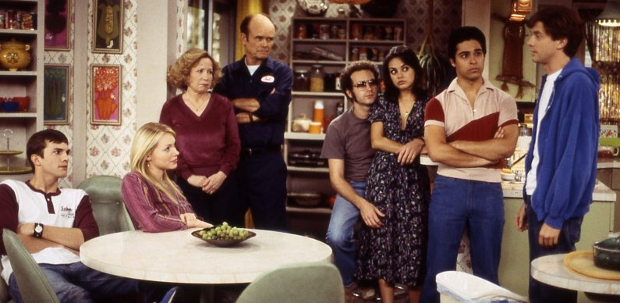
That 70s Show. Kitty is easy. Red is not.

What kind of parent are you? Here is a little quiz.

  1. Which one is more important for a child to have:
    a. independence or
    b. respect for elders?
  2. Which one is more important for a child to have:
    a. obedience or
    b. self-reliance?
  3. Which one is more important, for a child to be
    a. considerate or
    b. well-behaved?
  4. Which one you think is more important for a child to have:
    a. curiosity or
    b. good manners?

How many A’s did you have? How many B’s?

These simple questions were developed by this guy Feldman from Stonybrook and have been used by social scientists since the 1990’s to help quantify folks’ tendency to very high, high, medium and low levels of authoritarianism. The questions are effective because they aren’t loaded as good and bad options. Both options are fine. They simply identify a preference.

A couple of other guys, Hetherington and Weiler, wrote a book in 2009 that pretty much predicted this year’s inconceivable presidential campaign. No seriously. You don’t have to read the book, it’s in the article. But they talk about how people with high authoritarianism have been sorting themselves to the GOP.

These simple questions identify people’s leanings toward authority. Bottom line, the more A’s, the more you

…prioritize social order and hierarchies, which bring a sense of control to a chaotic world. Challenges to that order — diversity, influx of outsiders, breakdown of the old order — are experienced as personally threatening because they risk upending the status quo order they equate with basic security.– More from VOX.

It’s more than the preference for authoriy that’s driving people now. It’s authoritarianism combined with a concern for their (and their families’) safety.

People do not support extreme policies and strongman leaders just out of an affirmative desire for authoritarianism, but rather as a response to experiencing certain kinds of threats.

So you have the perfect storm. Uncertainty and social changes trigger the desire for the safety of clear and familiar rules and norms + a fear of physical threats especially from outsiders like 911 terrorists or ISIS.

When they face physical threats or threats to the status quo, [some people] support policies that seem to offer protection against those fears. They favor forceful, decisive action against things they perceive as threats. And they flock to political leaders who they believe will bring this action.

But the people being driven to the law and order and social conservatism in the GOP are not necessarily aligned with the party.

The responses to our policy questions showed that authoritarians have their own set of policy preferences, distinct from GOP orthodoxy. And those preferences mean that, in real and important ways, authoritarians are their own distinct constituency: effectively a new political party within the GOP.

This is what I said before. Not like I’m saying “I told you so,” or anything.

It’s just that we can’t understand what’s happening without trying to understand what’s happening. And this can mean uncomfortably confronting assumptions and learning about new models that fly in the face of these assumptions.

Don’t be afraid. They can smell your fear.


I totally recommend reading the full article on Vox. It’s long, but it’s worth it. And likely better than my tl;dr above. The Rise of American Authoritarianism, by Amanda Taub; published March 1, 2016.