Drive By

Tesla drive train.

Four years ago I went to a Tesla dealership. I strolled past the sleek chocolate brown coupe and found myself standing in front of a metal bed on four wheels. Wait. That’s the inside of the car? Where’s the engine? How car go?

The salesperson started talking about the battery and plugs and how smart the car was–that it would charge itself when electricity was cheapest. But I was floored by the lack of an engine. It was just a big, heavy battery. No pistons exploding inside of a big heavy hunk of metal. Almost no moving parts, except for the wheels.

Back to smart, the car was run by software that could be updated. And a few months ago, they started shipping all vehicles with self-driving hardware. The hardware is ready for programming so the car can drive itself. I’m thinking that we should stop calling these things cars. And use another verb for drive.

Cars and car ownership created modern America. We built extensive roads, suburbs, cul-de-sacs and drive-through meals because of cars. We have cement and asphalt covering one-third of the land in Los Angeles for our cars. We have people in jail for driving under the influence. More than three thousand people are killed in car accidents every single day, and 20 million are disabled every year. Seventy percent of all the oil in the U.S. is consumed by transportation.

People express themselves through their cars. Many a new parent resisted their first mini-vans because they never saw themselves as that kind of mom. Then there are growling sports cars, the monster trucks and the SUVs with bike racks and kayaks telling the other drivers who you are.

Us humans have a hard time imagining a post-car world. Frankly, we have a hard time imagining any world different than the one we know. But once cars start driving themselves, when they don’t use gas, it’s a new game. Gas stations, highway motels, auto repair shops, windshield wiper makers, will be superfluous.

Personal vehicles might be more like mini trolleys. They’ll be optimized, set routes. People will call for a ride and won’t need to find a parking space. Cities will lose revenue from speeding and parking tickets. Smart cars won’t need stop signs or traffic signals. They will modulate themselves to the other vehicles around via sensors and satellites.

It was only sixty-six years between the flight at Kitty Hawk and when Neil Armstrong walked on the moon. Maybe we will have hovercrafts. Maybe they will fly. Maybe. But however this new technology and new transportation plays out over the next decade, we are near the beginning of another upheaval in our world. And this one will be faster than the last. Buckle your seat belts, if we have them, that is.


Smell of the Season

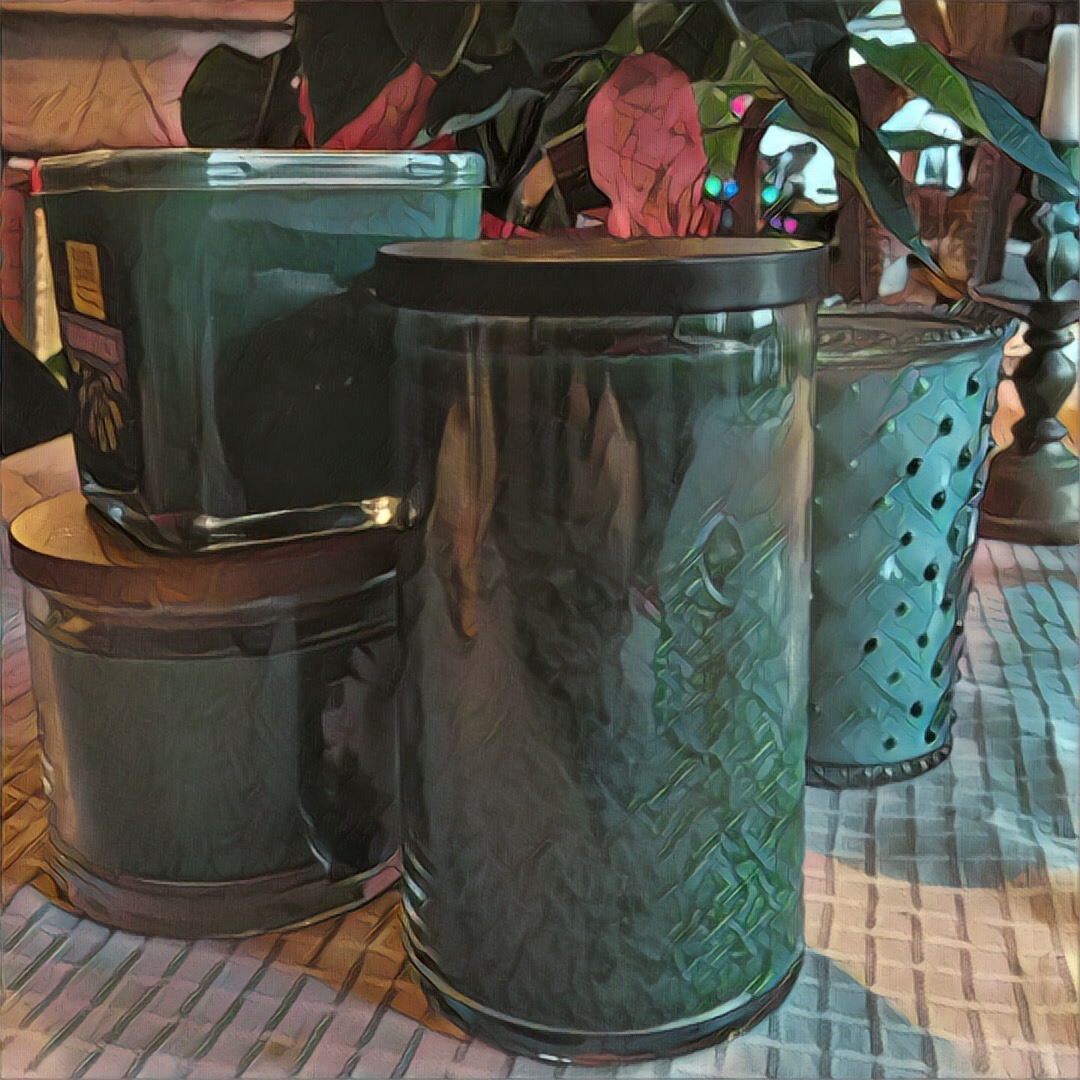
a array of green candles

She stood in the aisle of the discount store. It wasn’t a dollar store discount store. It was a store that sold department store goods at value prices. The price tags included the standard retail prices above the “you’ll pay” price. This type of store has been called Macy’s nightmare, because customers get everything on sale. The sale price is on last season’s or last year’s goods. Usually.

She walked in, as she always did when she was nearby. She really didn’t have a shopping agenda. After aimlessly strolling through the store, she found herself assessing shelves full of scented candles. She was developing a strategy before she went in.

She started looking at the candles presented at her eye level. There were round containers and square containers. Mostly round, though. Some were tall. Some were short. Some were squat, others elegantly shaped. Some had two or three wicks. Those were usually short and squat. There was one brand with wood wicks–they called them branches. They purportedly crackled as they burned. She thought that the wood ones were unlikely to burn through. Gimmicky wicks.

She knew that she would skip any orange ones. Those were leftover from Halloween and Thanksgiving, with fall scents of pumpkin spices and woody cinnamons. There was likely one that was going to imitate the smell of leaves, too. None were scents that she liked. She saw a coral colored candle. That one was trying to evoke a beach sunset. Her eyes dismissed all of the firey colored waxes to focus on the dark shades. She was looking for whiffs of Christmas.

She began her evaluation by grabbing the small green glass in front of her. It was called margarita. She placed it back on the shelf. Not Christmasy. She awkwardly pulled the winter balsam. It was almost too big for her hand. She opened the lid and drew in a breath. It had a very weak scent, and not of trees. Lid back on. She picked up balsam fir. The container was a pretty vase shape with decorative nobs. It smelled of a Christmas tree lot on a cold day. She put it in her cart.

She went through the balsam bough, pine evening, winter fir.  Oddly, Christmas Tree smelled more of vanilla than tree. She tried the white candle that was called winter wonderland. This smelled of cookie dough. She put that back. She looked in her cart and counted four candles. As she scanned the bottom shelf for a yet unseen treasure another woman joined her.

Standing at the candle altar, the new shopper started her own examination. She picked up one of the pastel candles and removed the lid. She held it to her nose and sniffed. Her head shot up and away from the container in her hand. She wrinkled up her nose to close the airwaves and block the smell. She frowned from her forehead and placed the lid back on the glass. She looked over at the other shopper and they laughed at each other, and at themselves.

By Any Name

Two books of religious teachings, the Quran and the Bible.

A young man walks into a restaurant full of families enjoying their meals. Little kids run around the servers who try and balance the pizzas, beers and milk filled cups with straws poking out of protective lids.

The young man, in righteous wrongness, pulls out an automatic weapon to free child sex slaves that he knows are hidden in the basement of this otherwise idyllic scene.

The staff and patrons escaped to nearby bookstores and coffee shops. The police arrived and the young man, self-radicalized by conspiring theories on the internet, surrendered with his hands over his head. Thankfully nobody was hurt. I guess nobody was hurt.

This in a very tony area of Washington, D.C.

He later said that maybe he made a mistake.

After recently having internet service installed at his house, he was “really able to look into it.” He said that substantial evidence from a combination of sources had left him with the “impression something nefarious was happening.” He said one article on the subject led to another and then another.- NYTimes

He was under the belief that this wild and unsubstantiated about Hillary Clinton being involved in child sex trafficking was true. And that he should do something about it.

Another time, another young man entered a church. He executed nine people who welcomed him into their prayer circle. He killed them because they were African American and he wanted to start a race war.

Roof wrote he was radicalized via the Internet following the Trayvon Martin case. Roof wrote he researched “black on white violence,” which took him to the website of South Carolina-based hate group the Council of Conservative Citizens (formerly the White Citizens’ Council). – The Daily Beast

You tell me he acted alone. Or that he was radicalized by social media and people spewing hate over the internet. Like other young terrorists.

[R]esearchers identified 16 key “mindsets” of members of terrorist groups….Among those mindsets: A belief that the world is a disaster, that peaceful change is not possible, that self-sacrifice is honorable, that noble ends justify immoral means, and that it is possible to create a utopia. – NPR

Terrorists believe they are making the world a better place.

It seems like there is a cohort of generally young terrorists that spans religious and political spectrums. They speak similar languages of antipathy and want to take actions to fix the world. They pick up and hone their ideology from online sources with improbable and flat out incorrect sets of “facts.” They study techniques that they find on like-minded websites to learn how to accomplish their attacks.

It’s critical to understand the actual problem we are trying to solve. Otherwise we risk solving the wrong ones. Are we running down a rabbit hole by focusing on specific ideologies? If we look at the characteristics of home-grown terrorists should we be looking for disaffectation? Youth? Fear? Bloated sense of honor? Is there a trigger that incites action? Are there interventions that could stop attacks? Is a focus on specific and deeply held moral or ethical beliefs helpful? Harmful? A distraction? Are there specific sets of ideologies that are more fertile ground for terror activities?

People who commit heinous acts of terror may read different holy books or have different motivations, but their wrongness is the same. Let’s work on the right problem.

Post #335

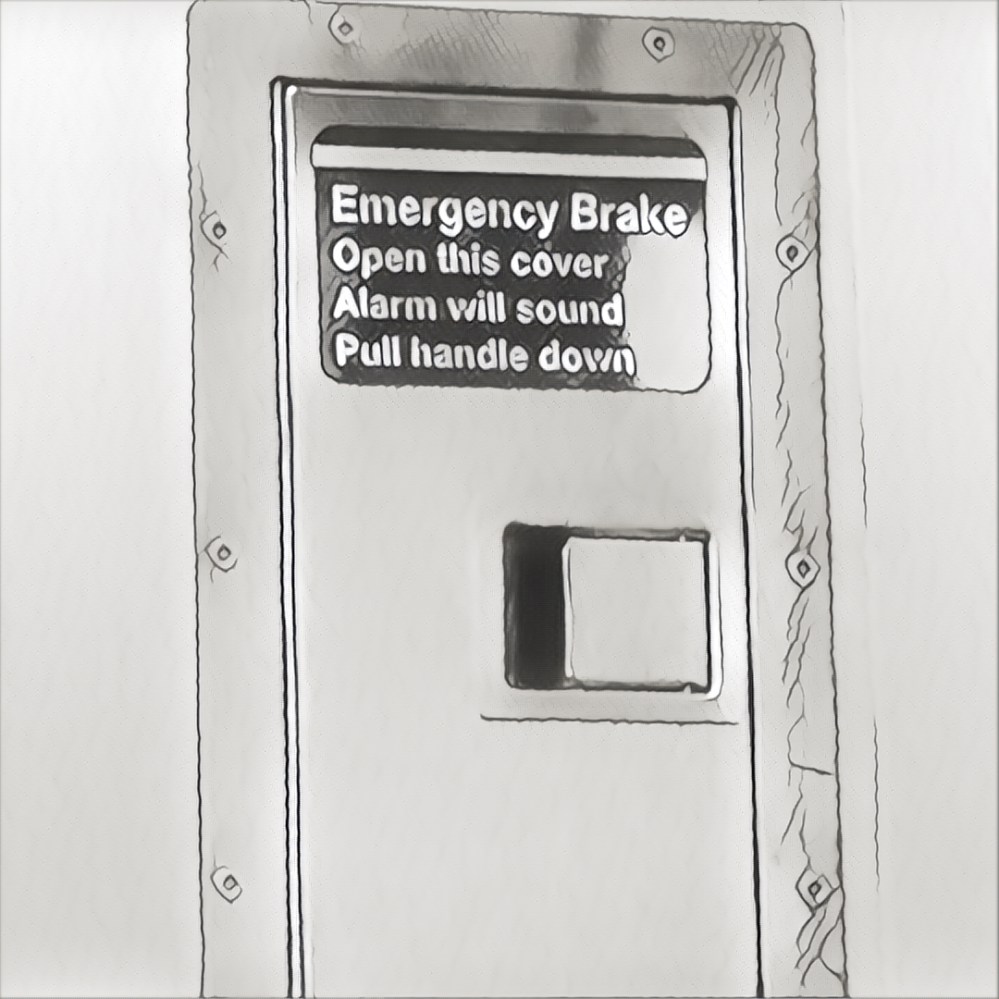
From the AMTRAK: Emergency Brake. Open this cover. Alarm will sound. Pull handle down.

I started writing something earlier today. And it was hard. Hard to think about and hard to write about. But, at least to me, worth writing about.

Frankly, it required more nuance than I had to give to it today. I have decided that I’m going to defer this post for a little bit. I still want to write it, but it deserves a bit more research and thoughtful thinkings and a better articulation.

You might be surprised that I do that, Loyal Reader. Surprised that this publication includes research and thinking and rifling through options and analysis and then writing. I realize that much of what you read here may seem like a simple stream of consciousness. And if I were to tell the truth, which is my preference since I am lazy and lying takes a lot of work, I would admit to at least my share, if not more than my share, of raw and emotive work. Even these, though, take some cognitive and creative effort. I’m not kidding.

That said, there are many posts that I wrestle with deeply. Posts that I start with gusto but then lose steam. Sometimes the energy is gone after a paragraph or two. Other times it is writing that simply doesn’t coalesce. It might have concepts or sentences that are brilliant, but it either doesn’t hang together with the rest of the words or just doesn’t have enough form to be cogent. While that may also surprise you, Loyal Reader, that is that I hold back when something sucks, it’s just a confession about how bad my writing can be.

In this case, though, I have something that I want to say and I want to say it to you, Loyal Reader. But first, I need to make sure that it will stand up on it’s own and that, second, if you object to my thesis, you will at least have enough to object to. I don’t want to leave you unsatisfied, or worse, dismissive. Truly your indifference is the most painful.

So, for today, I will only share with you a little about my process and a hint of something yet to come.

Empty Spaces

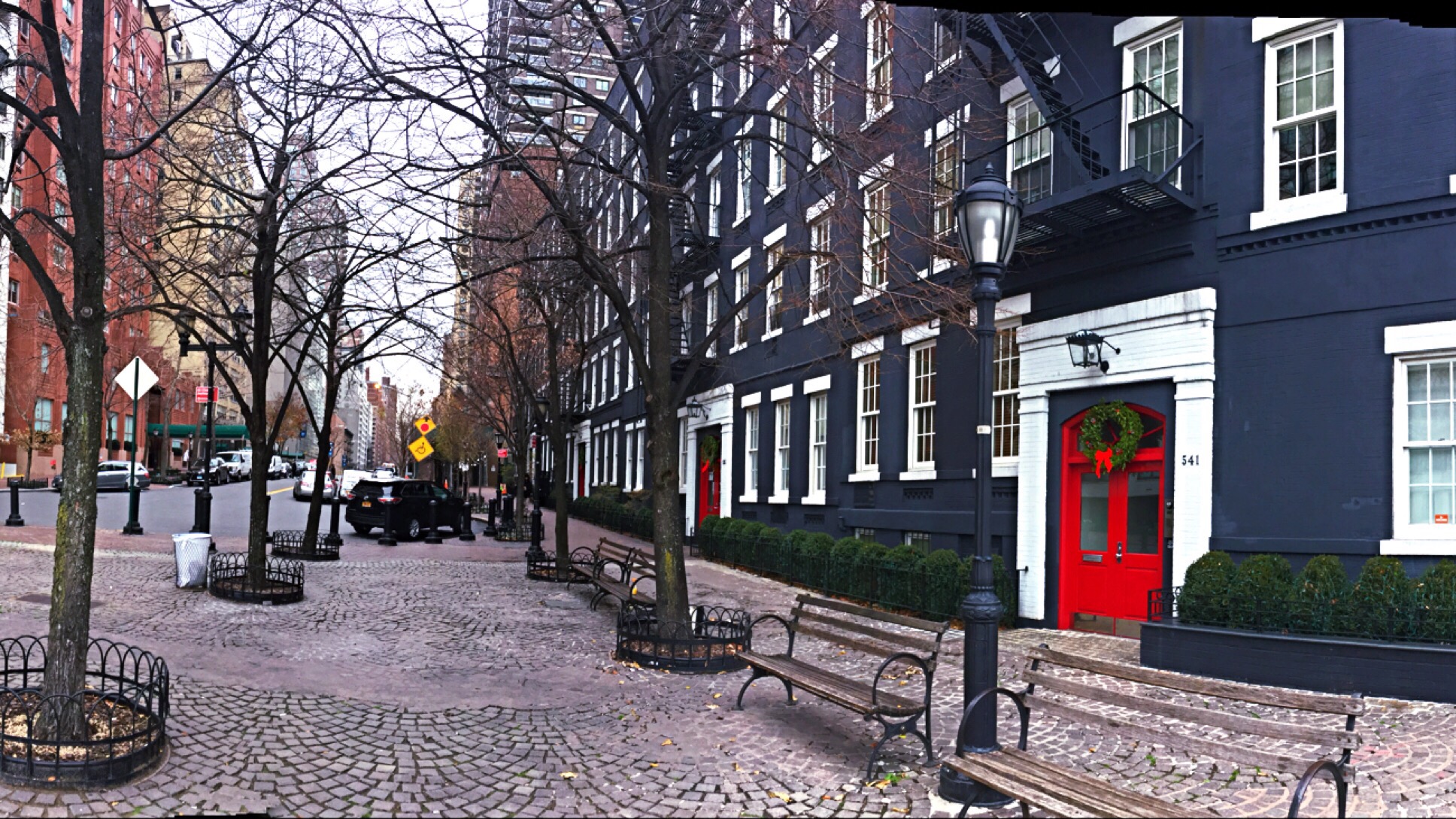
A boring street in an exciting city.

“I’m bored.”

That could have been the tag line to my childhood. It was definitely the refrain to my summers. 

We didn’t have camp or clubs or scheduled activities. Mom would toss us outside and tell us not to come back until dinner. 

There were three of us, but we weren’t that entertaining. We’d go up and down our short street trying to find other kids to play with. They’d be different ages than us, but the older ones had to watch the younger ones so they came along. If we were playing a make believe game, the smallest would be the babies. Or the maids. 

We didn’t split up by gender. There weren’t enough boys to do that. We’d all play together. Except Billy Macaroni. He was too rough. I don’t know who he played with, but one day he clunked my youngest Sib with his cap gun. She fell off the porch and cracked her head on the cement. I got spanked for this–for a reason still unclear to me decades later. Anyway, Billy didn’t play with us. 

We’d play kickball in the street. Someone would yell “CAR,” and we’d all move to the curb until it passed. There was a crack on the curb for first base, a place where the concrete slabs met for second and Mr. Nick’s mailbox was third. We didn’t have officials. Usually people ageeed on a call. There were, however, spirited arguments over certain outs. They never lasted long. They’d be resolved with an agreement for a do-over. It moved the game along, and nobody wanted to have a fight and break up the game and leave us back to being bored. 

One summer we made up a riff on the classic hide and seek. We called it cowboys and Indians. When the cowboy was caught, the Indians tickled them. One of the kids really hated to be tickled. We went easy on him. 

This game spanned houses without kids. There was a great bush to hide behind at Miss Lee’s. That was the demise of the game. One of the older neighbors complained because we’d jump their fences. Only sometimes. Back to bored. 

Another summer, I decided that we’d have a show. We watched musicals so we were putting on a musical. I wrote, directed, played a major role and marketed it. We had like eight or ten kids in it. There were rehearsals for maybe a few weeks. Or maybe a few days that seemed like weeks. We handmade tickets and distributed them to our families. Nobody came to watch. We didn’t actually do the performance. 

That worked out fine. The play was a good distraction from our boredom. It was just a game.

Sometimes we’d just ride our bikes around the block. It was a crazy suburban block that had a bunch of twists and courts and a long stretch next to a main road. We always felt well accomplished after we did that circuit. Occasionally we’d race in opposite directions. It was always exciting to see your opponent pedaling like mad to the driveway-slash-finish line. Even better, when you really beat them bad and were calmly waiting for them. Usually there would be an involved story about disaster or sabotage. More entertainment!

Other times, and for some reason usually after dinner, we’d ride our bikes to the Qik Pik. If very clever, we’d con some coin off Dad and return home with a mouthful–literally our mouths would be full–of Bubs Daddy bubble gum. My favorite was the fruit flavor. The watermelon was disgusting, but the other kids liked that a lot. And sweet tarts. Also loved by many. Also gross to me. 

We watched whatever was on TV that wasn’t the news. Reruns of weak sitcoms and procedurals and tons of old movies. Tons. This was an excellent wealth of data that came in handy when I did crossword puzzles to alleviate my adult boredoms. 

When we went on vacation we had to confront the worst of boredom. There was always reading in car, until the car sickness set in. Then it was playing the liscense plate game–which was always a boring bust in Michigan where cars from other states were very rarely sighted. We may have cheated a bit on that game. Then we’d end up making up another game or singing silly songs and eventually and inevitably coming to blows, prompting Mom to turn around and threaten us with pulling over. We never did find out what would happen if we pulled over. There was also some sleeping on each other’s shoulders. No drool allowed, though. Someone’d get punched for that. 

We’d get to the vacation cottage and had nothing to do on a rainy day. We’d figure out all the potential card games from a standard deck of cards. We’d have to re-remember the rules to rummy. We’d find a scrap of paper and play the dot game. We’d fight, too. Nobody was in charge of our entertainment. Nobody but us, that is. 

Someone said that she was recently studying something with kids, and she discovered that they didn’t know what bored was. 

Let me say that again. They did not know what it was to be bored. They always had something to do. Scheduled activities, electronic devices, the movie they wanted on demand, videos in the car. Never the nothingness of boredom. 

They didn’t make up games and negotiate norms. They didn’t lay on their backs looking at the clouds on a sunny day making up stories. They didn’t plot with their siblings about how to get back in the house on a snow day when all the other kids got called home. They didn’t have the downtime, the motivation, the inspiration of boredom. 

Now, I’m feeling lucky for all the hours that I had to fill by myself and all the coping, negotiating, creating and communing. And, I’m thinking that I’d do well to let the battery drain from my phone every now and again. For old times sake. 
Time in A Bottle

The Brooklyn Bridge from the FDR in the rain at night.

I was walking down Lex. That’s what my mother-in-law called Lexington. It was twenty blocks to East 72nd street. And twenty blocks back. I spent the first three or four blocks doing the math. Counting blocks.

The next few blocks I got a little overwhelmed by emotions. She hadn’t lived in Manhattan for seventeen or eighteen years, and hasn’t lived on this earth for over a decade. But I still miss her.

I remembered when I met her. It was my first time on the East Side. We were there for Easter. I wasn’t the first girlfriend brought home, and the relaxed banter around the table made me think that my presence didn’t have any great import. They come and they go, I surmised.

It was the biggest apartment that I had ever seen. There was a substantial foyer, with a bunch of furniture–chairs, tables, couch, lamps–and a big closet. On the right was the hallway to the bedrooms. One for the twins and the other a master bedroom with a separate dressing area with en suite.

The main living room was spectacularly huge, to me. It had multiple sitting areas and a most impressive oriental rug that, if rolled up, would likely take three men to carry. Someone would need to support it in the middle. The dining room was off to the side and led to a more regular-sized kitchen. The Future Spouse slept on the couch near the balcony. I slept on the pullout couch on the other side of the room, miles away.

There was a lively discussion around the family-laden table on that Easter Sunday. Catching up on school and jobs and the status of a cousin who was moving on to a third husband. The Future Spouse totally missed the middle husband. They come and they go, I suppose.

One thing that the Future Spouse did not miss, however, was the menu. There was a beautiful leg of lamb, peas and mashed potatoes. I am not a fan of lamb or cooked peas, but was brought up to eat what was in front of me without complaint, and, indeed, with gusto and praise to the cook. I wasn’t raised by wolves.

I had politely piled my plate with a reasonable amount of food that I was neither allergic to nor made me retch. Despite that, someone studied my plate.

“Well at least you like the mashed potatoes.”

I. Thought. That. I. Would. Die. Right. Then. Why couldn’t I just simply disappear? Maybe there would be an earthquake to distract us?

Embarrassed, I swiftly kicked his shin, sent daggers from my eyes and placed a forkful of lamb in my mouth followed by effusive compliments about the delicious meal. I mean really!

The woman who was the hostess and who would become my mother-in-law quickly spoke over the impolitic comment and acknowledged my truly heartfelt praise. She also shot a nudge–perhaps a virtual dummy slap?–over the top of her glasses to my companion who was rubbing his shin. The Spouse to this day claims that this was a strategic move to make me less nervous. I know that nobody supports that crazed claim.

As I turned down 72nd, I realized that I had five more blocks. I had forgotten about York. But I remembered now, even though I hadn’t walked this street for over a decade. I fought back another wave of emotions. It was still a part of my memories of home. A home, in this case, I was welcomed into.

Train Sense

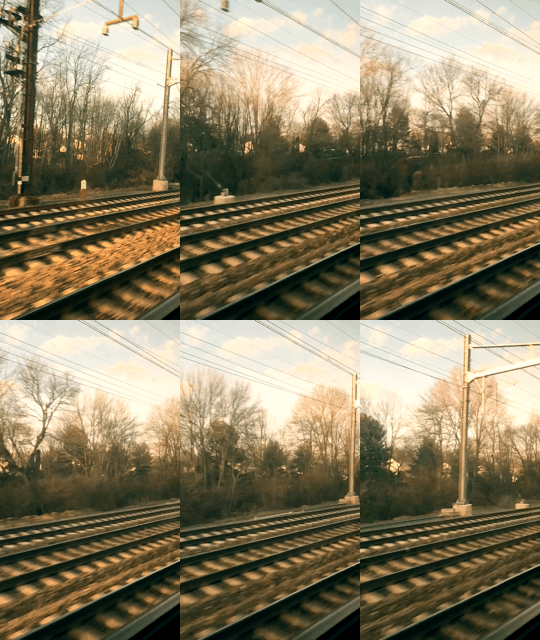
Looking out the train window.

As the sun crossed the sky from noon to dusk, the train hurdled and then shuffled and lagged then hurdled again. Heading north.

I understand why there are two ga-zillion songs about trains.

First, there is the sound of the train. It’s rhythmic chug, chug chugging at its low register. It is a growling beast, and then a purring one. It touches your insides via quakes delivered from the soles of your feet. It adds the high tones from the clang of the cars as they pass over the tracks, an underloved but meaningful timbre of the orchestra–more cowbell like. And intermittently the low deep whistle sings it’s lonely tune as the train passes by. It’s warning you that it won’t stop, that it will just break your heart as it powers by.

Then, there is the feel of the train. The jostle back and forth along the tracks. Where walking the aisle of the train is akin to passing an unpasssable sobriety test. It sings songs the rails, leaning ever so slightly to the left and then rolling a bit to the right. The rocking lulls many passengers to dream of adventures to come.

Looking out the window, the world rushes past. The portal is big, but squared off. The edge creating an illusion of a ribbon of film passing through at speeds fast and slow. At first, it seems like the outside is moving, but as the speed picks up you realize that you are the one that’s moving–you just didn’t feel it. Yet, it moves you. Like a song, sung via tons of metal gliding over the tracks heading somewhere else.

Making Change

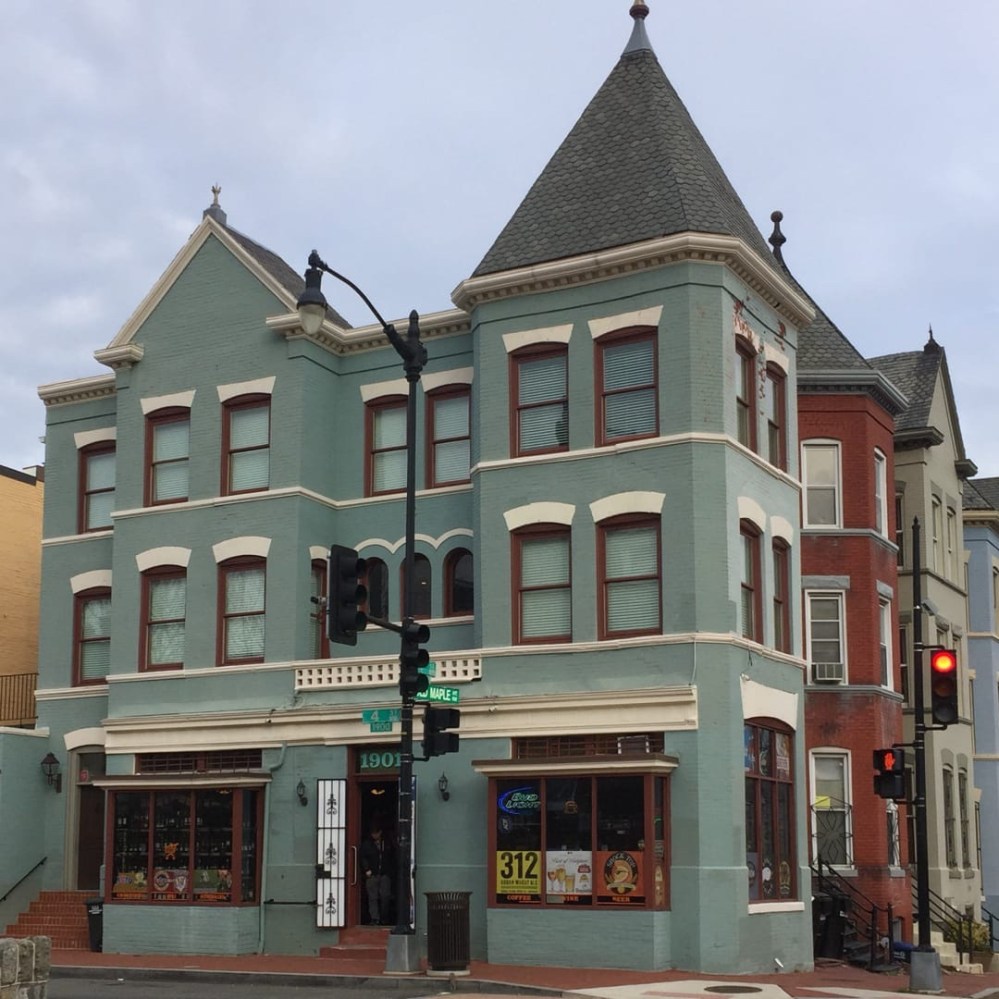
A restored store on Old Maple and 4th, NW.

The town is changing. The corner store where patrons could buy a single black and mild along with a lotto ticket is still there. It still sells lotto. There are a few cold 40s in the cooler, next to an extended collection of batch artisanal beer from the Rocky and the Sierra mountains. None from Milwaukee.

The long-term neighbors keep an eye on the new folks. The ones who foolishly stand on the street, rifling through their bags, not paying attention to the opportunistic predators. The first ones who fixed up Miss Carter’s house after she passed on. They were very into their front yard. The next ones who bought the houses that someone else fixed up. Lots of granite and walls coming down for an “open” floor plan.

The ones with their fancy three-wheeled strollers. They carry their fat babies in their reverse backpacks, facing out with their pink cheeks and pillow feet. In one hand they grip a stainless steel coffee cup and in the other the leash for their misshapen dog. The dog that is afraid of blowing leaves and trash trucks and barks at the ladies wearing their church hats.

The old timer likes most of his new neighbors. They borrow his tools and ask for his opinion on roofers and electricians. He tells the youngest ones to get their keys out before they step out of their Ubers. He’s not crazy about the Ubers, though. His buddy supplements his retirement by driving a D.C. He said that he’s not going to drive his own car.

Looking up and down the compact streets with homes that were residences to African American professors, judges and lawyers before it became a “transitional” neighborhood, two or three homes on every block proudly fly the red and white D.C. flags. A bunch of them “work” from home–whatever that means. One thing he knows it means is that there are more people around during the day.

The old timer sits on his front porch and nods to the parade of walkers and bikers and strollers bringing life to his street. He’s glad to have activity out in the open–but he knew what was happening in the shadows, too. It’s not gone, though it’s definitely on the wane. But every time there is a car break-in or a mugging, there is much clucking. It’s still the city, man, he thinks to himself.

He wonders if they will raise their kids here. If they will go to the neighborhood schools. He hopes so, because the corner store is carrying organic milk in addition to wines with foreign labels. But there’s also sandwiches. His wife doesn’t like him eating greasy carryout, but if he brings home a wrap, they’re both happy. These new people? They better stay.

Outside In

There’s a tree in my house. Like INSIDE my HOUSE.

It is tall, way taller than me. It is green. It has thousands of tiny needles, which is its version of leaves. It has little, browned leaves hidden in its boughs. It stands upright in a small red metal vase filled with water that it thirstily drinks. It smells of winter, of cold, of outside.

It will be in my house for the next few weeks. Tomorrow it will lose its wildness. I will string bright lights on its branches, pushing some deep inside so that it glows and leaving some on the outside so that it shines. I will hang a hundred or so trinkets on it, some are as old as me, some as old as the boys and some even younger than The Beast. I will top it off with a star.

It will scent the house with pine and outside. It will hit us square for the next few days, then it will be the background smell, taken for granted. It will cause us to change our paths through the room, walking around its fat bottom, bumping into it and making the bells that I hang low jingle.

It will protect the boxes and bags that will be stacked underneath it on Christmas Eve. It will watch over us as we have parties, imbibe, nibble and feast. It will hear our secrets, our disagreements, our barks and our love.

And then, after the New Year, it will be gone, leaving an invisible mass that we will walk around for a few days, until we forget. It will hide a few needles in a corner, between the floorboards, camouflaged in the pile of the rug. And I will pick a needle out of the bottom of my sock sometime in July and remember that there was a tree that finished it’s own time inside of my house.

Does Not Belong

Why is a bare chested Michael Phelps standing on the corner in front of the

The door was pulled open. The air was sucked out and displaced with the Boss Man. He strode in with a purposeful swagger. 

The staff looked up. It was neither a surprise nor a source of stress to see him. That was weird because he had been generally absent, at least until he fired the general manager last week. 

That was weird, too. Not so much that he was fired. There was a palpable relief upon his exit. The weird was that he was fired at all. Nobody believed  that would ever happen. The bastard had maintained his reign of terror without consequence for the past two years. That’s a lifetime in this business. 

So Boss Man let his boy go. And, he was newly, and fully, committed to turning this joint around. Honestly, he was primarily committed to establishing his own restaurant group–so this second place needed to succeed. 

His flagship was handily making its numbers. A lineup of basketball players, an occasional actor receiving a White House honor and famous politicians’ spouses provided the attention and space to coast a bit. This outpost concept was not as blessed. He was on a mission to understand why. 

He tapped a bearded staffer near the bar. It was quiet–the time between brunch and dinner. “Come back with me.” 

They walked into the office. Boss Man was talking all the way. He wanted the staff to help him. This guy was thoughtful and verbose. Boss Man pulled up some emails. 

“Like we left a hundred-k in events on the table.”

“Seriously? You want to hear from me?”

“Of course man, I want to know it all.”

“Your boy likely left 500k on the table. Tito saw this and prolly booked 400k.”

“Tito?”

“Yeah. Before your dick-boy let him go. Tito cared more about this place than anyone.”

Boss Man head bobbed up and down in violent agreement. He was writing checks. “Give this to the delivery?” The guy took the check and left the office. 

The bartender came in. She was getting ready to call it a day. The guy came back and she gave him a playful push as she walked back out.

“Look, can I just give you a piece of advice?” Boss Man looked at him earnestly. 

“Yeah. I just want all my staff to just talk to me. Let me know what’s going on. I appreciate you and your honesty.”

“Well that’s what I have to tell you about. What you really need to do, man, is to pay attention to your employees. You need to know them better. Like me. I’ve never worked here for a single day in my life. I work down the street. I don’t work here, Man.”

Boss Man was panicked behind his calm mask. His eyes gave it away though. They became wide as saucers. That’s why he didn’t play cards. 

“Yeah. You’re right. Thanks.” The guy was peeing himself. Boss Man couldn’t be more clueless. Playing off his indiscretions–sharing internal emails, revenue info, his inside line to the city and a panalopy of personnel gossip like who should be a manager–was part of his problem. The guy outed himself before Boss Man asked him to be the GM. He had to stop his side of the game before it went too far. He wanted a good relationship with Boss Man. Boss Man was well-connected. 

“Really, the sad thing is that I want your joint to succeed more than your old general manager did.”

“Yeah.” Boss Man shook his head slowly from side to side. He was looking at a spot on the ground between him and the guy. “Sad.”

The guy turned and walked away. To stay would just embarrass them both. “I gotta go. I gotta get to work myself. I just came here for late lunch. Here’s my number. I’m happy to provide additional help–but depending we might end up with a consult fee.” He laughed. 

“Right. Thanks, man. Close the door?” Then he put his head in his hands. He drew them across the smooth surface of his shaved head, pushing back until he saw the back of the door again. He sighed long and low, breathing out the word “fuck.”