
Throwing in the Towel

Pink bath towel set.

It was a simple task. Maybe it wasn’t really that simple since there was already a task in the queue. She would call them “errands.” She had no idea what he would call them.

The goal was a simple wedding, and, as far as weddings go it was. The time frame between “will you marry me” through “I do” was a week shy of three months. They conned a priest into marrying them in a church and selected the #2 readings with full mass. Honestly the only criteria for the service was to avoid the “submit to thy husband” reading. Any of the other Old or New Testament love readings would be fine. A box checked.

There was a maid of honor and a best man, no additional maids or bearers. She told the maid to pick out a dress that would be appropriate to the best man’s tuxedo. And any color. Except white. There were many compliments to the bride over the maid’s sartorial selection.

She bought her own dress off the rack from the fancier department store. It was left over from prom. She had a choice among four or five white or near white frocks. She was very happy with the one she bought. And it was on sale, too.

The reception would be in his huge group house where there had been many large parties with multiple keg runs. He had a roommate who had access to wholesale booze, and they found a caterer that would bring food and a cake and wouldn’t charge for the champagne flutes even though they were only pouring and not supplying the bubbles.

Her sole requirement for the catering was that they show up. She didn’t care what the food tasted like as long as it was there before the guests. When the caterer mentioned a bakery he worked with, she enthusiastically said “Yes!” even before he could sell her on the the airy, buttery cake with raspberries spread between the layers. Her only request was that the bride and groom at the top of the cake was a man and a woman. Done and done!

The week of the wedding was pretty busy. There was family and friends coming from across the country–at least one, and perhaps as many as six, said that they had to witness him say, “I do.” There was a house that they closed on two days before the wedding. And there were two separate households to move into the freshly mortgaged cottage.

He and his best man were heading off to pick up the three tuxedos, one for the father of the bride, too. This is where the simple task came in. She realized that there were no decent finger towels for the bathroom.

“When you guys are out, can you pick up some hand towels for the bathroom? Pink, please. And if they don’t have pink, white would be fine.”

The time to the rehearsal began to close in like the trash compactor in Star Wars. There were amazing wedding elves moving furniture about, sweeping and mopping, and artfully hanging these ridiculous white paper bells and twists of gray and pink crepe paper, but the list of things to do was still daunting. She was becoming overwhelmed. He knew. She didn’t know, so much.

She needed to get her clothes and check into the hotel, then change, then to the church for rehearsal, then the dinner, then back to the hotel. She kept going over her list around and around like that stupid zipper ride at the fair. The one where you go up one side and down the other in these cars that swing around and upside down and the people riding throw up. The elves checked in and she distributed more tasks.

The soon-to-be groom and his best man came back with the tuxedos. He handed her dad’s suit to her so she could bring it to the hotel. He wasn’t going to the hotel.

She looked at him.

“Did you forget the towels?” Her voice went sharp and a half octave higher from the strain of being calm. She was approaching the peak of the zipper ride.

“We got them. We didn’t know where to go so we went to the drugstore. They didn’t have many towels but we found these.” His brother showed a shopping bag. He pulled out four towels. They were more like kitchen towels, which would be okay, but they were not pink. They were orange.

She did not handle the color substitution well. Her disappointment was of volume. It was such that the women who would be her sisters-in-law the next day flanked her, grabbed her by the elbows and led her out of the house to work through her zipper list. She wasn’t sure, but it seemed that everyone who remained in the house was relieved when the squad removed the ticking bomb.

Anyway, The Spouse brought up those orange towels today. “Well at least it’s not as bad as when I got those pink towels!” (Yes, he still clings to his improper claim that they were pink. I kept the evidence for about twelve years.)

Why bring it up? It’s been decades of errands and lists and stress and explosions and near misses since that day. I guess the towels are an expression of something the priest read at our supersized wedding:

Love is patient, love is kind. It does not envy, it does not boast, it is not proud. It does not dishonor others, it is not self-seeking, it is not easily angered, it keeps no record of wrongs. Love does not delight in evil but rejoices with the truth. It always protects, always trusts, always hopes, always perseveres. Love never fails.

1 Corinthians* 13:4-8

So when he reminded me of his abject towel failure, I asked him why with a crooked grin then a chuckle and then a belly laugh. Because I know exactly why he said it.


* for those keeping track at home, that’s pronounced First Corinthians.
Dozing

A baby with fat cheeks.

He was definitely still a baby, but was increasingly more independently busy. Increasingly, in this case, used as a multiplier for more. It was happening fast.

Walking was always at top speed so you’d call it running. There was jumping and dancing, too. Words, and sounds that mimicked words, would tumble from his mouth. They would have the cadence of conversation, and likely a meaning that was uninterpretable, for now. He could clearly convey, “No,” usually when admonishing the dog. “No, babau” or whatever he said that meant dog.

It was time for his nap–remember he’s still a baby–but he was using his found power of no on his mother. She needed him to stop being busy for a bit. She had some busy of her own to do. Also, he was tired and she wanted to stay ahead of that.

She lifted him up and gently placed him in the bed. He sat up. She knew if he stopped for a few moments, sleep would win. She stretched out next to him and put her hand on his little back. He turned his head toward hers, lifting his chin so he could see into her eyes. They were just like his.

She saw her reflection in his eyes. She whispered a little hushing sound just above his head. She looked at his big round cheeks, rosy pink in the center dissolving into the smooth, clear porcelain at his rounded chin and his tiny nose. She brushed her hand on his cheek. It was warm, fueled by his little furnace inside. He sighed a baby sigh, and she felt his body relent a bit.

She locked eyes with him. He wasn’t going to let her out of his sight. She thought his eyebrows were perfectly formed, a light brown hinting at auburn framing his green eyes. With those lashes. Those long curly baby lashes coveted by all the women. He blinked. It was starting. He blinked again. She answered with a slow blink of her own.

She loved watching him fall asleep. The long, slow blinks that would get longer and slower until his lids were too heavy and would not flutter open. She couldn’t move too soon, otherwise, it’s back to the coaxing stage. She rubbed his back. He lifted his little hand and placed it on her cheek. Her heart swelled. She knew he was sleeping when she felt the wet, warmth of his perspiration. He would flash just as he fell asleep. And then she, too, was asleep.


Zero to Infinity

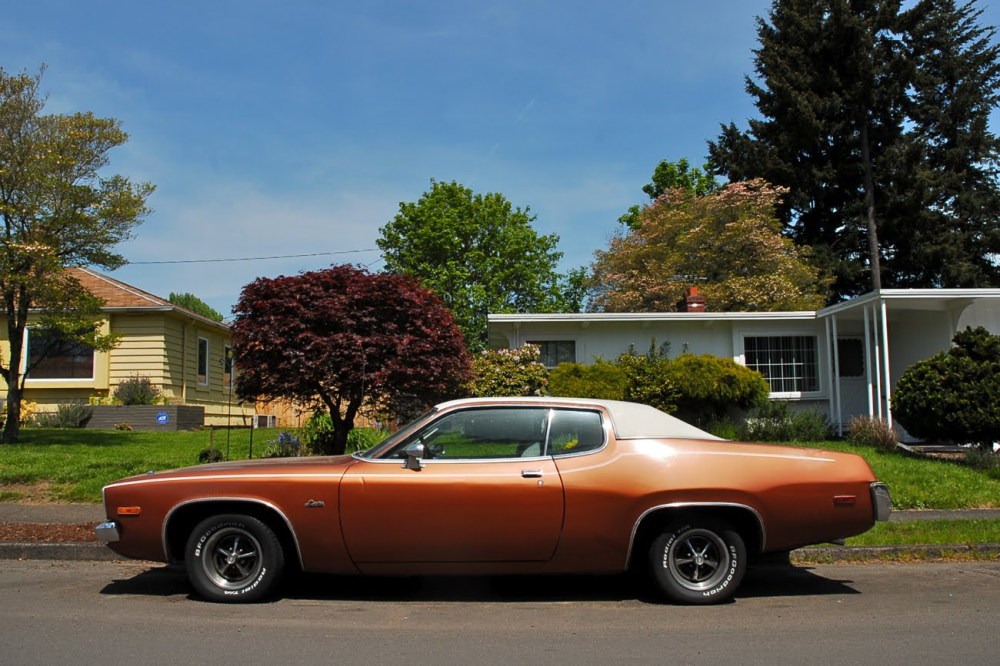
Plymouth Satellite Sebring parked on an idyllic suburban street.

My Older Sib cracked up Dad’s car within ten days of getting her driver’s license. Twice. She lost her driving privileges after the second crash. She also lost my driving privileges–eighteen months before I could get my own license. Collateral damage.

Our suburb, like all Detroit suburbs, wasn’t walkable. It was a bedroom community for people who worked for the Big Three. There wasn’t any public transportation to speak of, I think GM blew up the bus system. This meant that for pretty much all of high school, I had to bum rides with friends to go to the mall, games, post-game grub and parties.

When I got my first job, Dad was my taxi–even though there was almost always a car available in the garage. He could have made this easier on himself if he didn’t hold me responsible for the Sins of the Older Sibling. The drop off and pick up ritual became less painful for Dad when my boyfriend began to cover many of the evening shifts. Dad always seemed to like that guy, maybe I just figured out why.

It’s not like I never, ever drove. It just had the same frequency as a blue moon. This made me an inexperienced driver. My friend Jenny drove everyone around. She was a good driver because she drove a lot. She also didn’t drink which was good for the rest of us piled in and draped all over each other in the front and in the back of her mom’s Pontiac LeMans as we went from the liquor store to find an old guy to buy us beer and then to the football game where we drank the beer in the parking lot and then to get some pizza to sober up and cover up the beer stink.

Dad had a true blue 1972 Plymouth Satellite with a big V-8 that spent the winter months stalling and not running well at all and the summer months barely holding back a vicious growl. It was a dud in the winter. It was ready to go in the summer.

On the day of a blue moon, I was gifted the great privilege of driving myself to work. I’m not going to lie. It was awesome. I felt like the most grown up and amazing person. I had the windows down and pushed the tinny speakers past their safety, blasting WRIF–the Home of Rock and Roll–so everyone would know that I loved Bob Seger, too. I pushed in the bulb of the cigarette lighter and waited the amazingly few seconds for it to pop. I almost stared at the red hot coils concealed in the lighter casing. I lifted it to the cigarette in my mouth, barely missing being clumsy enough to burn my cheek.

I used my mirrors and my blinkers. I stopped at the stop sign and waited for the light to turn green before making my right turn. I had Dad’s car parked in the lot behind the restaurant before I finished my smoke. I considered driving around the block, but these suburban blocks were not square. They were filled with squiggly roads that doubled back on themselves or deposited you in a cul de sac without a exit to the main road. I knew how the streets worked in my subdivision, but was ignorant of the worming in this one. I didn’t drive. I didn’t know.

I was closing this night. It must have been a Friday or a Saturday since we didn’t close until midnight. There was a little less than an hour’s worth of closing tasks. There was the teenage manager and the grill guy, me and another girl. I was over the moon to be able to offer a ride to my shift-mate.

It was a congenial crewe, full of the banter and bullshit of a group of teens who just closed the store. We were feeling our oats. There wasn’t anything to do. The only thing open was the 7-11, and we already had all the coke we could drink. It was time to go home.

The grill guy walked up to his dad’s car in the lot. It was a long, long, long red Cadillac with a white vinyl half-top. The street lamp shone off the chrome surrounding the squared off headlamps. The grill guy was feeling pretty powerful, too. He started talking smack about how fast the car was.

“Oh, really? Not faster than this big blue monster in the summer.” I then quickly copped to the fact that it was a winter lemon. The grill guy jerked his head up.

The grill guy was very tall. He was a tall guy with translucent white skin topped with a head full of more red than brown loose curls. He wore his hair unusually short for those days. He was jonesing for a promotion, perhaps even a hamburger slinging career. He tried to hide his height by scrunching his head into his shoulders and scrunching his shoulders as close to his hips as he could. But when I put out the challenge he almost straightened.

“Yeah? Right. That’s not going to beat this Caddy.”

“Let’s go.” I ran to the passenger side of the Satellite to unlock the door for my girlfriend. He ran to the red car, chased by the teenage manager that he was giving a ride home. We were going to head out on 13 Mile.

It wasn’t a real race. We didn’t have a start and we didn’t have a finish. We were just going to see who was faster.

I fumbled with my keys and with the ignition and with the locks. Nobody used seatbelts then. I turned up the radio and rolled down the window. But the Caddy was already leaving the parking lot, heading toward the intersection at a good clip. There was a red light in front of us, and nobody on the road. It was after 1 a.m. I turned left into the corner gas station to skip past the light and take the lead. Oh the cleverness of me!

The light had turned just as I peeled out of the gas station. The red Cadillac was hot on my tail and looking to pass me. I hit the gas. He was gaining on me. My co-pilot was beginning to hyperventilate. Oh hell, there wasn’t time to begin to do anything. She started to scream. “SLOW DOWN! THIS IS TOO FAST”

I looked down at the speedometer needle that was moving past 65, past 75. The grill man still in hot pursuit. I was at 85, 95 and I knew he was, too. The needle continued to 100 and then 110 and up to 118. The Cadillac was lagging. I don’t know if he got over 100 mph, but when I checked my mirror, he was done.

I took my foot off the accelerator and the car slowed. Or at least it stopped going faster. I gently tapped my brakes. I didn’t want to fishtail. I don’t know how I knew that. Maybe I observed this as a passenger. Anyway, it seemed like it took a long time for the car to drop down to a normal speed. That’s when I realized that we were going fast. On a two lane road with a gravel shoulder. I was focusing on the race, not the speed. And the speed was exhilarating. To me.

My companion was no longer speaking to me. She had blown past her red zone. I don’t know when she stopped yelling, but her silence was worse. She was so angry. I had terrified her. I apologized. She never got in a car with me again. I never drove that fast again.

Me and the grill guy were just going to see who was faster. But that’s not what we did. What we saw was who was willing to push the risk. I am not saying we were testing our bravery, because the activity was stupid. It’s not brave to be stupid. We simply pushed each other in ways that people do when they are showing off. We had our hubris on full display. We were having fun and sped off like adolescents do. The grill guy listened to an inner moderator. Me? Not so much.

I didn’t drive Dad’s car into an accident, and it wasn’t the last time that I raced. But it was the last time I pushed a dare too far. But nobody crashed. Nobody was hurt and yet, it was too far. The truth is, you don’t have to drive off a cliff to go too far. Lesson learned.

Pomegranate Seeds

A flight of beer and a bowl of potato salad, beans and pulled pork. It was yum. Also, thanks Prisma!

My dad liked his potato salad with gravy. The potato salad came out of the fridge, especially since it had lots of creamy mayo. It was cold. And he liked it poured over with hot gravy. Like if the potatoes were hot and mixed with butter and milk. But they weren’t. They were cold. With mayo and raw onions and cooked eggs.

Everyone, other than him, thought it was pretty gross.

But it was Dad’s thing. Potato salad with gravy. It got to be so much a thing that when Mom made potato salad to accompany, say, burgers on the grill–served with condiments right from the fridge, like ketchup and yellow mustard and pickle relish and sliced onions and tomatoes–she would sometimes magic up some gravy for Dad. If you cooked, you know that there was some serious magic going on to make gravy when the meat was on the grill. And, by the way, Mom NEVER opened a can or jar of “gravy.” That gummy shit is a poor excuse for gravy. Even for potato salad.

Anyway, today, The Spouse asked me if I wanted to go to the auto store to get the battery for the Mini replaced. It was on warranty, and the Mini was frequently on no-go. I said yes.

The Spouse poked his head in the bathroom–I NEVER get any privacy around here–a few minutes later to admit that the errand was extremely dull and wondered why I would go. I said I’d go because I wanted to hang out. I gave The Beast a treat, and, along with the promise of new wiper blades for my car, we went to the auto store.

Me, being the clever Doc that I am, figured out the correct wiper blades and waited for The Spouse. And, while waiting, discovered that there was a yet to be tried brewery a mere four minutes drive away. Clearly, this was not going to be an extremely dull errand.

While at the beer makery, I spied the BBQ truck. The Spouse left the flights behind to have a tour of yet another set of stainless steel vats. I went to get the grub on the street from the truck.

As I studied the offerings chalked on the side of the truck, the very pleasant attendant asked if I had their BBQ Pearl.

“No,” I said.

“People really like it. It sounds weird but it’s the most popular. We layer mac and cheese with baked beans and pulled pork.”

“I know it’s weird, me not you, but I don’t really like mac and cheese.”

To her enormous credit, she did not make a disparaging face.

“Now, if it was like potato salad and beans and pork, I’d like that alot better.”

“I can make that!”

I realized I was channeling my Dad. The idea of hearty, hot food on top of potato salad was like gravy. And I said, “Yes.” I ate it as my Dad. And it was good.

I miss my Dad every day. Today I felt like I connected across the the lands of the living and the lands of those who have left. Over potato salad. And baked beans. And pulled pork.

Amen.

Postcards

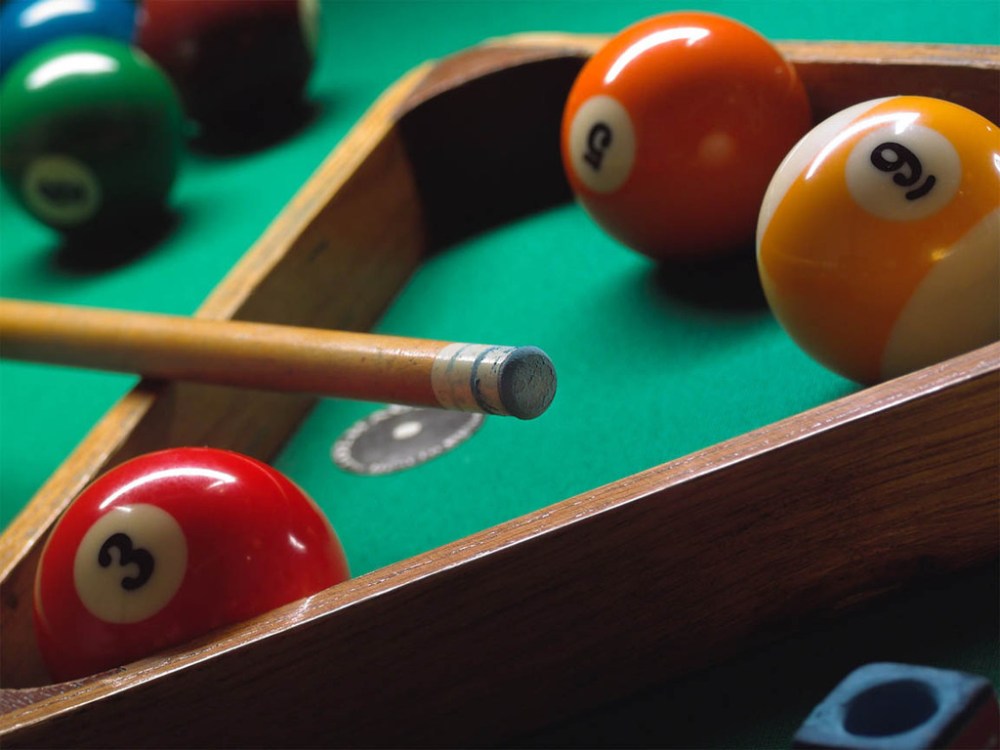
A triangle, a pool cue and a few balls inside the triangle and a few balls outside the triangle. The table is green. The balls in the triange are 3, 5 and 9. Nine is striped.

There was this joint a few blocks away. It was tiny. There were two rooms, not including the johns. It was on the far corner of Colorado Avenue, and you had to walk a few steps down to reach the entrance. Not many. Maybe two. Max was three.

The door wasn’t the sturdiest, but the bar was solid. When you walked in you’d see a few dozen coffee mugs hanging from the wall. And, when you walked in, it was as a bell heralded your entrance. There wasn’t a bell, but you still felt a chime. As you crossed the threshold, Becky would come from behind the doorway to greet you.

She was a slight woman. She had thick bangs that topped big, thick plastic glasses. She wore her hair pulled back in a pony tail. It wasn’t long and luxurious. It was thinnish and a dull blonde. The rubber band was functional. This was her joint and she had work to do.

I don’t know that anyone else worked there. She must have changed her own kegs. She made the sandwiches–my favs were the turkey and the roast beef. I really really liked her ice cream scoop of potato salad. It was a big scoop. I don’t think she made it herself, but it was standout in freshness and flavor. The food wasn’t cooked. It was fixed–in the kitchen behind the bar. The only thing served hot was the coffee.

There was a great story about the robbery at Becky’s joint. A guy walked down the steps where he knew a small, fortyish woman tended bar, and he had a gun. He very nervously pointed it at the proprietor and demanded her money. She looked at him and said she would bring it from the back. As she stepped through the open doorway to the kitchen, the sweaty guy heard the click, click, click, click, click, click,  click, click, click, click of  ten guns being drawn. A heavily mustached man sitting at the far end of the bar spoke. His eyes were facing the shelves at the back of the bar. He didn’t move his head.

“Man. You done went ahead and fucked up. See all those coffee mugs on the wall. This is where we come to get a coffee. During our patrol shifts. Why don’t you put that gun down now, son. And I will have the police officers behind you lower their weapons.”

It was a cop bar. The would-be robber fell to the ground, was cuffed and taken away. Then Becky came out of the kitchen. She refilled the mug of the man with the mustache. Nothing else was said.

Just to the right of the bar was another open doorway, to the second room. That room was mostly for darts. There were leagues that played there some nights. Other nights people would pull their flights from their pockets and throw. It was fun.

There was also a misshapen pool table. You’d ask Becky for the balls if they weren’t on the table. If she didn’t know you, you might need to leave a driver’s license. But if she didn’t know you, why would you be playing pool there?

We were drinking Miller, the champagne of beers, from longnecks. We met up with some union brothers of The Spouse (when we were dating and not married, but let’s not confuse things by giving The Spouse a new identifier). Five of us were at the pool table playing a very unskilled game of eight ball. Slop counted. Someone brought another pair of handfuls of Miller.

She was a bit aloof, but not for any reason other than she didn’t know everyone. She was tall and had a quick smile and a throaty laugh. Her eyes were big and expressive, especially when she was making or parrying a point. Her layered dark blonde hair was heavy enough to stop it from flying all over the place. Still, her bangs danced just above her brows and cascaded along her cheeks and down her back.

I knew her husband, but she wasn’t with her husband. She was with a different union brother. I liked the one she was with better than the husband anyway. The crowd were mostly members of the local, except for me, her and her future her sister-in-law. Then there were four of us at playing pool.

In those next minutes, which were less than ninety, I became friends with my best friend that I ever had in Washington. The most regular person I knew here. She mostly grew up around D.C., versus the transplanted folks that were the majority of my colleagues, acquaintances and friends.

She had both a kindness and a take-no-prisoners air. I think that any prisoners would have been glad to spend time with her, though. Even if she upbraided them, she would relate to their experiences while demanding better. They would try harder.

She was an artist. She had huge feelings. She was the best mother I knew. She honestly and lovingly challenged my own failures in a way that pushed me to fail less. I want to be more like her.

Today would have been her birthday. Facebook told me. I found my head in my hands and cried again at losing her. Every year I cry a few times because I miss her.  I wish she was here to slap me upside the head and tell me the truths that I am too dumb to see. And I remain grateful, so very, very, very grateful, that she was my friend.

Dearest Kris, having a wonderful time and so wish you were here. xoxo

As Time Goes By

Louis and Rick disappear into the midst, a beginning of a beautiful friendship. Last scene from Casablanca.

A friend from college said that his mom always made him try something three times before deciding that he didn’t like it. I guess he could decide he liked it in one, if he wanted.

The first time that I saw Casablanca, I was in my late teens. There wasn’t on demand viewing, so you waited for films to appear on the network or cable TV schedule. When you got to college there was the repertory circuit. My large state university had four or five film co-ops that took over large auditorium space in the evenings to show movies. For like a dollar, or maybe two.

There were black and white films from all over the world, soft-focused and slightly washed out French comedies, Woody Allen retrospectives and the screening of Indiana Jones and The Lost Ark that I saw with a friend who was studying archeology.* Leaning over after the first set piece, where Indy narrowly escapes the traps only to find himself face to face with his nemesis, the friend whispered, “Archeology isn’t really like that [one thousand one], it’s actually much more exciting.”

My first screening of Casablanca blew me away. Rick’s self-perserving opportunism. The corrupt police. Bad Nazis (not like there are good Nazis, but you know what I mean). The bravery of the resistance and the face of Ilsa. Watching the way her face was lit on the big screen in the lecture hall made me want to brush her cheek. The way she looked down when she lied to Rick. The hurt in her eyes. Her perfect nose. Her cute hat. I fell in love with Ilsa immediately. Just as Rick did back in Paris, which they would always have. When he turned her away on the tarmac, ruining their chance for love just for the good of the rest of the world? What a sacrifice. Tears streamed down my cheeks. I choked back the sobs. What a tragic story of love that could not be. Not at that time. War is awful.

Today a friend remarked that she very rarely rereads books. She knows what’s going to happen and there are so many unread books it seems unthrifty to spend time on the known. I reread books all the time. Especially if I loved the characters or the writing, and it’s not always the same story.

The second time I saw Casablanca was on home video. The Spouse had hooked up a new rig, and I bought some classic movies I thought we’d like to see. We bought them, so they would need to stand up to rewatch. The pile included Nashville, Ran, Wizard of OzNotorious, Bladerunner (pre-director’s cut), GhostbustersIt’s a Wonderful Life, ChinatownStar Wars, Bridge on the River Kwai, The Princess Bride, and, of course, Casablanca.

I draped myself over The Spouse on the couch. I made popcorn. We pressed  ⇒. Intro and the map of North Africa. Then there was the impenetrable armor of Rick, the injustice of the lawless law, the heaviness of the Nazis crawling around the bar, the bravery of those trying to help refugees to safety, and that petulant Ilsa. That immature, selfish woman who in a pique was ready to abandon her husband as he worked–at grave danger–to defeat those awful Nazis. You know, the man that she made a promise to? Her HUSBAND? I hate infidelity. I hate that someone makes a promise and throws it aside when times are tough. I hated Ilsa for her childish grab at romance when the world was going to hell. And where did she get that stupid hat? War makes people do bad things.

I instituted the three times rules with The Boyz. It was useful when applied with truth. That is, if they tried it and did NOT like it, they could push it aside. They would never be forced, or even cajoled, into imbibing in that which they didn’t like. It wasn’t a trick, but an approach. Sometimes they didn’t like something because of the texture. The Big Guy was like that with tomatoes. Sometimes it was the flavor, I’m thinking about that thing with tarragon. Sometimes both, that would be Baby Bear and cooked carrots. I don’t care much for cooked carrots, either. No matter, the idea of revisiting something you didn’t like to see if it’s still true seems a classically liberal approach.

The third time I watched Casablanca, it was to be cooperative. There was an outdoor screening that The Spouse was involved with. The movie was the backdrop to a family evening, and I got extra spouse points since my disgust with the film was duly noted years earlier, while draped on the couch. The Boyz were pretty sophisticated cinephiles and there was a picnic in the works. I was in.

It was just past dusk when the movie hit screen. There was too little contrast for the first ten minutes until the dark moved in and filled in the black parts of the black and white. As expected, there was a stiff Rick in his monkey suit looking like he needed a double on the rocks, the crooked police chief handed his winnings declaring that he was SHOCKED to find gambling going on, the irony of hating the Nazis for occupying the French in its colonial empire–but Nazis are still the bad guys, the Nazis getting drunk and singing their stupid song until the brilliant resistance leader drowns them out leading a patriotic chorus of “La Marseillaise.” That crazy pillbox hat on Louis Renault, the police chief.

The lighting of Ilsa’s face was still beautiful, but she’s the backdrop, just another Mary Sue. But watch how Rick and Louis play cat and mouse with each other. Are they on the same side? Well, in a way, yes. Rick is on his own side and Louis is on his own side. Not exactly the same side, but interesting. They’re both trying to stay upright on shifting ground, trying to stay alive in a dangerous world. Then, to make sure that the resistance leader gets to safety, Rick threatens the police chief with a gun. Wildly, the police chief supports Rick’s murder of a bad guy Nazi. Now Rick and Louis have resolved their conflict, realize they’re good together, and walk off into the fog to maybe defeat more bad guys. A buddy movie. War brings out the worst and best.

I take in art through the lens of my world. As a young Doc, Casablanca was a love story, as a recently married Doc I saw a barely adverted betrayal, as a Doc with kids, the movie was bigger than a hill of beans in this crazy world. Different flavors at different times.

I haven’t tasted City Lights in a long time. It would be my third time. The charm. Play it, Sam. Again.

_____________________
*Fun fact. This was the same friend whose mom instituted the three-times rule. 

Hand Out

A pile of coins in somebodies hand.

Today I was thinking of the day that I quit my canvassing job. It was my summer job, and I couldn’t do it another day.

The day was sultry, like today. So hot that, when you walked, bugs would touch down on your skin for a salty drink of sweat. So dank that, even early in the evening, the sky flirted heavily with the on dark its wet edges. The breeze, if you could call it that, was more like the exhaling of a dragon. After it ate a bag of nacho cheese Doritos. It’s nothing except nasty.

But when you’re dropped off in tonight’s territory, you ignore that. It doesn’t make sense to be angry with the outside since you’ll be there for the next four or five hours. You have doors to knock on. You have a smile and a riff to give to the person on the other side of that door. Heat madness has no value.

I wasn’t a good canvasser. Not like those well-trained, almost Disney Channel canvassers I see on the streets of D.C.  No. I was an old school canvasser. It was so old school that the goal for a 21 year old woman walking in an unknown neighborhood alone was to get into the house of a stranger to make friends enough that they gave you money. I only got grabbed on my ass once. I was never bit by a dog.

I wasn’t a good canvasser and my wages proved that. You only got salary if you made quota. Quota was the amount of money you were tasked with raising. You needed to make quota all week to make salary. I never did that. I probably should have been fired with my low take. I made quota maybe 4 nights over the summer. But I got paid out a percentage of my take. That was enough to pay for my sublet, utilities, french fries and beer. It was summer.

People with more experience than me always loved the nights when your territory had curvy streets. That meant more income. But to me it was just doors opened by glassy-eyed housewives who would let me prattle on about energy costs, and then when I did my ask they’d say that their husbands weren’t home. And that they didn’t make decisions, not even a $10 or $25 donation, without him. I found myself humming Mother’s Little Helper as I dejectedly stepped off the porch and walked back down their long driveways. It took me a while to realize that their vacant interest was more vacant than interested.

The last week I canvassed we were in Dearborn. The second day of the week I, as usual, wasn’t doing great. People weren’t home, the ones that were weren’t interested, and, honestly, I wasn’t good enough to get their interest. I hated asking for money. This one house, though, had a pair of teachers behind the brick facade. They invited me in. It was the money shot, getting in the house. The idea was if you were in, they’d write a check.

The wife-teacher offered me lemonade. I joined her and the husband-teacher on their back patio, sitting at a crackled-glass topped table, underneath a sun shading umbrella. I spent thirty or forty-five minutes talking about energy, jobs, cars and education in metro-Detroit. The sun was just starting to sink as they offered me a beer. It was a cold Michelob on a dripping night. I was totally screwing up, I should have been to more houses. But instead I shared progressive political thoughts with my hosts. I was too friendly with them to ask for a check, but he wrote one for $15 anyway. That plus the other $15 I canvassed meant that I wasn’t making quota. Again.

The next night, a Wednesday, we were a little further west. Away from the city. I was doing poorly, as was my way. I was discouraged. I’m sure I was looking sultry. Without any sexy. The house in front of me wasn’t huge, but it looked pricier than yesterday’s neighborhood. There were four late-model cars in the driveway, including a shiny new red Cadillac. I rang the bell. I could see into the house through the screen door. No response. I looked to my right at the thousands and thousands of dollars worth of almost new cars in the driveway and rang the bell again. A woman spilled down from upstairs, her silky kimono-y robe streaming behind her as it was still wrapped around her. She had auburn hair that framed her face in a soft Liz Taylor kind of bouffant. She listened to my pitch with great interest and said, “I’m sorry I can’t help. I was just laid off.” And she looked at me blankly, and I realized that she had been blank the entire time.

Thursday night we were in Dearborn Heights. It was the end of the week because we didn’t knock on doors on Fridays. The streets were laid out in a strict grid. This was not a place for me to make up for my week’s failures. The houses were still brick, but were closer to the sidewalk. The heavy concrete porches were reached by climbing five steps and were fortified by brick and mortar. I half-heartedly knocked on doors and pressed doorbells for the first thirty minutes of my shift. It wasn’t unusual that most people weren’t home yet. I plodded on. The houses were mirrors of each other. One had the door on the right side of the porch, and the next on the left side. I met her at her house which had a right-sided porch.

She seemed like a grandma, the stooped woman who answered the door. She lived with her son who was at work. She had a slight accent, and I am going to say eastern European, but that could be because that was the accent of my own grandmother. But she was much younger than my grandma. Maybe not too much older than my mother, but she had lived hard. But well. And with pride.

I almost didn’t go through my spiel with her. I didn’t think I would get anywhere, but she asked me a set of engaging questions and I realized that I was unfairly dismissing her. Not as a donor, but as a person. She was interested in the energy issues and asked me to explain the regulatory process. I think that she was more curious than interested, and I know that she was more lonely than curious. We sat on the top stoop of her porch. Again, the sun started to set. I needed to move on and thanked her. She asked me why I was there. I told her that I was raising money in the neighborhood. She looked at me in the eyes and held up her finger so that I would wait. She disappeared into her house and returned in a few minutes. She had a pile of coins in her hand.

She took my hand into her small hand and passed the coins. “This was for the paper-boy, but I want you to take it.” I didn’t want to, but I wanted less to insult her, this woman who was so engaged with me, who was so kind, who was so generous. I thanked her with all of my heart and walked back to my rendezvous point. My pickup wasn’t for ninety minutes.

I sat down on the curb and lit a cigarette. I decided right then that I was done. I couldn’t take the paperboy money from the working poor anymore. And I couldn’t extract money from the Cadillac lady.

I saw in that week the generosity of those who have little. People who will share what they have. Because they know what it’s like to do a day’s work. They respect your work as they do their own. They give what they can.

I think about being embraced by that woman on that muggy day and in that oppressive week. I think about her giving from her heart. I think about the woman running down the stairs in her billowy robe.  I remember who I am, and who I wish to be. And I remember to put my hand out, to help when I can.


Beautiful Swimmer

Maryland blue crabs. So much work for so little meat for so much reward.

I didn’t grow up eating Maryland crabs. This was very obvious to people who did.

Early in my career, I worked for an association. One of our members, Mary, invited me to speak at a chapter event. Since it was at the beach I said, “Yes!”

Ocean City, Md., has a boardwalk with a big ferris wheel that reveals then hides the shore as it circles. It has cotton candy and beach fries and whack-a-mole and t-shirts that say, “Don’t Bother Me, I’m Crabby.” But you don’t get crabs on the boardwalk.

Mary and her husband Chester were from Baltimore. They had a daughter my age, a son a few years older and two grandchildren, so far. They loved the beach and the Eastern Shore where the watermen delivered rockfish and oysters and crabs. There’s also amazing Eastern Shore chicken you can get at a fire house on the way to the ocean. But this isn’t about chicken.

My hosts spent many summers picking crabs (picking is how you eat crabs). They made no assumptions about me, though, and politely asked if I ate crabs. I thought I did, and it seemed like fun. They took me to a favorite spot. It was back over the bridge, heading away from the ocean across some marshy land. It was a crab house.

I knew how to order a beer, and Charlie asked how many crabs I could eat. I didn’t know. And, I really didn’t know. When the waitress brought the platter piled high with steaming crabs unevenly seasoned with red powder, I realized just how over my head I was. This wasn’t lobster. No. It was not lobster at all.

Charlie grabbed two of the crustaceans and dropped them next to his beer. He started pulling one apart and banging a piece with a hammer. I swigged my beer and, following Mary’s lead, I took a crab off the plate and placed it in front of me, on my newspaper tablecloth. I snuck a look at Mary and mimicked her by pulling off an appendage. I used a nutcracker to open it. The use of the tool on the oddly shaped claw did not come natural to me. I did, however, get some meat. And a little shell. The meat was quite good. The shell, not so much, but it did have the flavor of salt, celery, mustard, cayenne, and whatever seventy-three other spices are in the yellow can of Old Bay. Fortified, I repeated on the other side of my crab. Then, I was stuck.

I turned the body of the crab around. It was looking at me. I spun it away, but I couldn’t find a way in. Chester was on his fourth. Mary kindly asked if I had picked crabs before. She didn’t want to embarrass me, but I was obviously incompetent. Or, in her mind, untrained. I looked up, wide-eyed, and she schooched closer to me. Chester knocked back another crab. I could tell because the empty carcasses were piling up on his side of the table. He paused to eat his ear of corn. I think he powdered it with Old Bay before he ate it.

Mary showed me where I had missed some meat on the hinge part of the claw. She pointed at the legs and demonstrated where to pull them off and how to suck out the strings of meat. These were very big crabs, so it was worth the effort. She expertly flipped the crab on his back and lifted the tab on its belly as if she were unlocking a round red box. This exposed an opening at the top for her thumb to wrest it’s body apart.

I clumsily followed her demonstration and attempted on my own crab. I couldn’t get a good feel to separate the “lid” from the body. She helped me. I was now faced with the insides of an arachnid. That I was supposed to eat. But first I had to brush away the grayish gills. Not to be eaten. At this point I was starting to wonder what I could eat. It’s been all prep except for those claws I ate twenty minutes ago. Meanwhile, Chester ordered a second beer and was on his eighth crab. He was licking the salty seasoning off his very messy fingers. I think he smirked at me. Maybe it was a look of pity.

Now, I was supposed to take the body and crack it in half. The body was like a big honeycomb, only thin and fragile. Mary was eating from hers. Mine collapsed in my hands and I learned why it was called picking as I picked hunks and scraps of crab meat out of the debris of cartilage. There was one piece, though, that slid out intact from it’s chamber. It was moist and sweet and significant enough that it was more than one bite and more than two chews for each bite. And I knew, in that moment, that was why we were doing this.

Chester ordered another plate of crabs.

I struggled through another crab, but by the time I got to my third, all the lessons escaped from my head. I couldn’t find the tab. I ate my corn. I successfully extricated meat from the claws. I was dirtied by splashes of crab juice from my forehead through my elbows and, of course my hands. The backs as well as the front. There was blood coming from my thumb where I cut it on the shell as I was trying to find something to eat. I ate my coleslaw. It was good. It was cool. My beer was warm.

I pushed my crab around on my newspaper a bit. Mary started feeding me meat that she had picked, but after a few bites I decided that she should feed herself. I said that I was full. Chester lifted his eyebrows at Mary as he sucked the meat out of his twelfth crab.

Once I had declared my “fullness,” I could better enjoy my dinner companions. They teased each other with the bite of a long marriage but without bitterness. They finished each other’s sentences and interrupted when the one told the story wrong. I had an iced tea to round out my dinner. Chester ate the last of the crabs. He drove us back over the bay and back to our conference hotel. I did have a fun time and thanked them for the adventure.

The hotel was a step or two above a touristy, “family” oceanside motel from the 70s. The towels were very thin, but were more than sufficient to wash off the crab juice. When I had cleaned up and changed my shirt, I thought the coast was clear. I surreptitiously crossed the small lobby–it was more like a vestibule–and walked to my car. Up the strip was a drive through. I got the Number 1 hamburger meal. With a shake. I knew how to eat that.

After that lesson, when we’d eat crabs I’d sit next to somebody who liked picking crabs and let them feed me. Sometimes it was The Spouse. Many times it was someone else’s spouse. I wasn’t proud. Occasionally someone would give me a refresher lesson. I liked crab, just not enough to pick them. In other good news, crabs were usually part of a summer party with an accompanying barbecue. I could always have a hotdog after mooching crab.

One year, the Spouse was away for the neighborhood crab feast. He had the role of walking the boys through their crab consumption. This time, it was on me. But, I knew exactly what to do. I taught them where the meat was in the claws, to open and eat from the hinge side, to suck the juices from the legs, to pull the tab and separate the top, to remove the gills and crack the body. They were much better students than me, but over years of observation I had became a crab picker. So much that people started to think I grew up eating Maryland crabs.

Callinectes sapidus, the Maryland blue crab. It’s part of my language. Hey hon, Chester wouldn’t get all the crabs now.

Shiner Doc

This is the shore of Lake Superior, in the Upper Peninsula of Michigan. People are at the beach sunbathing. Those are NOT whitecaps but ice flows. Brrrr!

There was that time that I gave the Best Man a black eye. But I get ahead of myself.

When people think about Michigan, top of mind is cars and cold. Most folks don’t realize that in addition to the mitten–i.e., the Lower Peninsula–there is another slab of Michigan. It’s on the other side of the big Mackinac Bridge, which spans the four or five miles where Lake Michigan and Lake Huron kiss. It’s the Upper Peninsula (UP). The hearty people who live in the UP are called Upers.

It’s crossways the 320 miles between Wisconsin on the west and a narrow river separating the U.S. from Canada on the east. To the North is the greatest of the Great Lakes, Lake Superior. You can tell it’s the greatest lake because it tells you so. Superior.

My friend’s brother went to school in the UP. I never quite knew how he got there from Milwaukee, but he went to Tech. He studied business at a mining college. Tech is way up north in the Keweenaw Peninsula. [I know, yet another peninsula. What is it with these people?] This Peninsula juts deep into Lake Superior.

Another thing you should know about Lake Superior is that it is cold. Average Keweenaw water temp–when it peaks in the summer–is still less than 60°F. It’s big. It’s cold. And it has a reserved, maybe even a foreboding, personality. If you stare at it too long, it will brush you off. It doesn’t care.

It was at Tech, on the Keweenaw Peninsula, strutting out into that cold, indifferent, arrogant, Superior lake, where the brother met a girl. She was an engineering student at Tech. She must have come from that Scandinavian stock that settled in the UP. The immigrants that set up the saunas in every deer camp that encouraged a naked plunge into the snow. Her long blonde hair cascaded over her shoulder like Upper Tahquamenon Falls. She had a quick smile and a smart wit that was punctuated by the wink of her cerulean eye. And legs for days.

She was from Hancock, which was the town across the bridge from Houghton. When she and the brother decided to make it official, the wedding was in her home town.

So the brother was getting married, and we were off to the destination wedding. Destination far. But we knew some people along the way. And we had bug spray. Fact: the mosquitos can be as big as birds up there on some of the inland lakes. I don’t think, though, they stood a chance off the frigid, Lake High-and-Mighty.

As was our modus operandi, we were late. I think that’s why I don’t remember the rehearsal dinner. It was likely embarrassing.

We were in Marquette for a few days before the wedding and likely slept in or decided on more coffee. There may have also been a side trip to someone’s childhood memories at a lodge purportedly haunted by a murdered doctor of John Dillinger. The purveyor of that story, however, was the step-father who was known to enjoy an acid trip or two and would tell you about his out of body experiences, even without you showing any interest. We didn’t see any ghosts. But I was scared to death when my friend told me about the wild dogs that were on the premises. This was an odd story, too, because the feral beasts were the spawn of a beloved bitch from his childhood named Penny. When I heard a howl or maybe it was a rustle of a bush, I ran back to the car. It might have been Penny’s mad babies. 

It wasn’t my family. And it wasn’t my affair. And I was along for the ride. So we missed dinner. But we did not miss the bonfire.

I knew my friend’s mom. She was awesome. I knew why he loved her so much. She was very kind to me whenever I was on a visit. And she would always bum a menthol off of me. She and her floating spouse smoked regulars. I don’t know if she preferred the mint of my Virginia Slims or just wanted a change, but she was always a little excited to take one out of my pack and light it between her lips. She was pretty, but like a mom. She was probably 44 at that time.

I think we were hungry, but, like I said, blew through any food festivities. There were literally no food options at 9 p.m. in Hancock, Michigan. The all-night diner closed by eight. I bet it opened at 4 a.m., though. For the working folk.

The young people, that would be us and my friend’s brothers and the friends of the betrothed, were on the move. We tried to catch up with them by downing a few cans of whatever cheap beer we drank then. It was likely a Wisconsin brew, since we were close to that border. Somehow I am thinking that we also ate cheese balls for our dinner, on the way.

We left the SuperBeetle behind and climbed in the back of somebody’s truck. There were trucks and vans and cars in the caravan headed to the pitiless and Imperious Lake. For a bonfire.

I knew the groom-to-be. He was super amiable. He and his fiancée were gracious and begged off from the ongoing celebration. They had a big day coming. They took their leave.

This was the first time that I had met the other brother. He was the family favorite.

I had heard his name many times. He was the eldest. The smartest. The chosen. The most charming. He was a medical student at a prestigious Jesuit university in the east. I never thanked him for my introduction to Washington, D.C., which I met on a trip for his graduation. The ceremony was at the Kennedy Center. I was much affected by our nation’s capital and vowed to return. Spoiler alert: I did two years later, for the duration.

There may have been a few dozen of us, with coolers full of beer and melted ice. My friend and I were grubby from the drive and the {mis}adventure of the day, but nobody noticed. The cars rolled up to the Super Lake. Lake Superior. We piled out, grabbed beers, and stood between the fire and the water. The bonfire of driftwood was going as strong as it would. It wasn’t big, but it was a fire.

The brother was in our transport. He was erudite. He was also condescending to my friend. Maybe it was their relationship, the older and the younger sibling.

I thought the brother was obnoxious. He wasn’t my favorite. No, not at all. He wasn’t like he was advertised by his family. He was tall, but slight. I thought that he was throwing me menacing looks. And me, buoyed especially by a few downed cold cans, threw barbs back his way. I may have been rude. I likely was rude. But I was thinking that he was not boss over me, I was not part of the family dynamic that excused his vainglory. To me, he was an ass. Not an asset.

He was peeved by my disdain, and I liked that. I dismissed him by turning away and taking another beer from a cooler. They were less cool now.

A few people were stepping into the ice water that was lapping along the sand. Some rolled up their pants. One stripped to skivvies and jumped in. I found that amazing. I was not that drunk. I don’t think I could be that drunk. And if I were that drunk, hitting that cold water would reverse any drunk that made me that stupid. But, I was from downstate. These Upers were made of this Superior Lake, of the pines around us, of the dark gray smoke from the damp driftwood. Maybe the copper was in their veins. Not mine, though.

I was ambushed from behind. Lifted above his head onto his shoulders. My swagger quickly displaced my shock. The brother started walking to the water, telling me matter of factly that he was going to toss me in. I was feeling the control leaving me as he stepped into the water. He didn’t even have his pants rolled up. I cursed him loudly, in my deepest strongest voice. He laughed. I told him that he was going to turn around–because now I was unable to leave his shoulders without having a dunk tank experience. He laughed again. That was when I took my fist, and I pummeled it into his head as hard as I could.

He stopped. He was very angry now. Too angry to humiliate me any further because he was being humiliated, too. He took the strides back to the shore, and I jumped off. I found my friend and we had another beer. The brother left in the next car. We left a little bit later.

I was ill-prepared for a wedding, and I was grateful that it wasn’t fancy. The wedding party dressed in gowns and tuxedos, but the guests were more relaxed. The bride’s sisters helped me with my braid, and my friend’s mother fretted over the use of the wrinkle cream she brought. None of us twenty year olds had any clue how to apply it.

The groom and his best man presented themselves to the mother. She screamed. Not loud, but not a little. The best man had a black eye. The pictures!?! I said nothing, but the story came out. And the mother was not a little angry with me. It was unfathomable that her favorite would have earned that shiner.

I, on the other hand, stepped away and lit up one of those Virginia Slims and felt very, very, very proud of myself. Almost, Superior.


Sizing Up

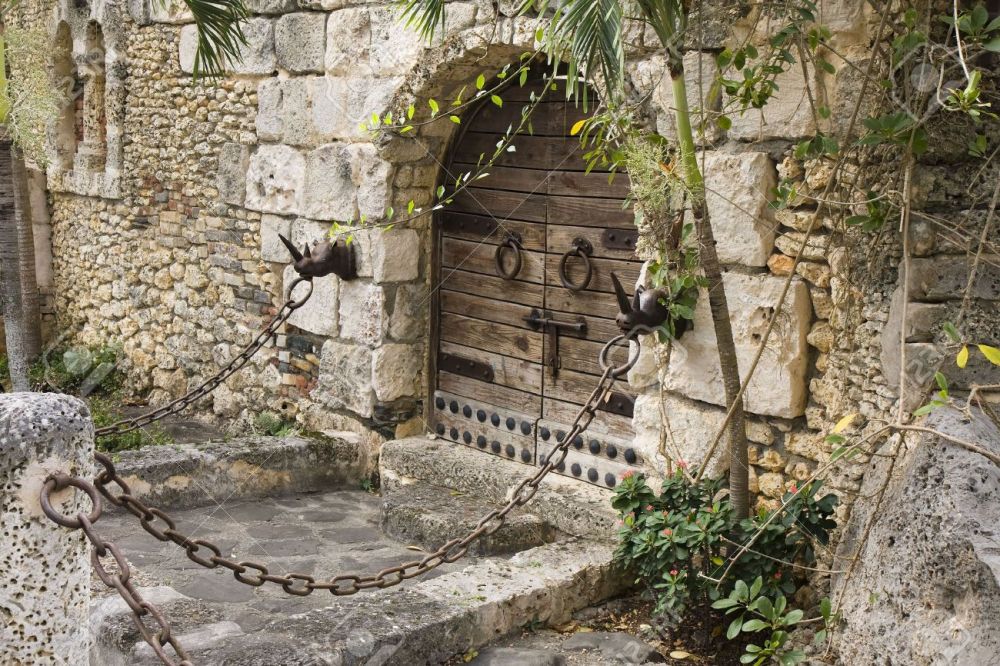
Castle gate and wall. Imposing, no?

When I was a wee Doc we lived in The Old House. The house wasn’t especially old, but we called it The Old House to differentiate it from The New House. We moved to the new house just before My Older Sibling started kindergarten.

The New House was fully and completely new. It stood on what had been a part of a good-sized dairy farm that was subdivided into new blocks of varying sizes with twisty roads, half circles and a few cul-de-sacs. There were two very tall and very impressive trees. They were like Ents. The rest of the greenery was new sod and very young, very slow growing trees. When I left for college they barely provided shade.

The Old House, on the other hand, was surrounded by big old trees in the front and in the back. Indeed, the entire street was protected by limbs stretching and trying to touch their brethren across the street. Dappled gold and bursts of saffron would sneak through the small breaks in the big green canopy like specks of amber in hazel eyes. Closing my own, I can still see it, and feel it.

There were two very frightening things on the street with The Old House. First, the bees.

We were terrified of the bees. Someone told us that if they saw you move, they’d come after you and sting you. They were huge bees, the size of golf balls. No. Tennis balls. They would buzz back and forth among the flowers of the old lady down the street. We called her grandma. Her flowers were lovely, except for the bees that hung in front of the flowers. They looked like they were on wires that someone would occasionally move–either a small jerky up and down motion or a smoother left to right. We would spy them and very carefully, silently and slowly, holding our breaths, walk past grandma’s house.

Aa soon as we passed her property line we’d explode like a pinball out of the chute to our friend’s porch to play. I remember a bunch of cement steps to her porch. It was dark and cool, likely from one of those ancient elms. I don’t remember what we played, though. I think we launched ourselves off the steps.

The other terror was another neighbor’s dog. It would bark in a vicious manner. It was very loud. It’d throw itself against the fence to try and break through while full of snarl and howl to intimidate us as we walked by. And that monstrous dog was on the other side of the street. He really didn’t have to go to all that trouble. We weren’t allowed to cross the street.

One day I was walking back home by myself and the dog was banging against the fence. I was spying for bees and looking back over my shoulder across the street to see him break through. There was no worry and creeping past the bees. I took off as fast as I could to my house. The dog was gaining on me as I ran up the driveway through our open gate. I used all my strength to push the chain link gate closed, and it latched just as Cujo bashed into it. I lay on the ground for a second, catching my breath and watching the insane tirade of the evil dog. Worried he’d force himself through my barrier, I ran around the side of the house to the door and pushed my way to safety.

I was four when we moved. I don’t remember going back to The Old House for a long time.

The next time I saw the house, I was with my Dad. He was visiting our old neighbor, who was his best friend. It was maybe ten years later. I walked up our old driveway to the astonishing fence that saved me from that demon dog. Really, the fence wasn’t as astonishing as I was astonished. The gate that I remember breathlessly dragging to save myself from that ferocious canine wasn’t much more than two-feet tall. It would barely keep out a Jack Russell Terrier. So the dog that was chasing me was not a mastiff. Makes sense. Everything was bigger when I was smaller. I had a good chuckle.

I remembered this fence today. It came to me as I was thinking about fear. What are we afraid of? Do we let the objects of our fears grow huge before us? Or do we take a closer look and see them for what they are? Do we keep the images we had when we were most afraid, or do we gain perspective over time? Can we apply new knowledge to dissect and examine our experience and use that understanding to grow? Or do we stay stuck in that moment of terror, never to lift our heads again?