As Time Goes By

Louis and Rick disappear into the midst, a beginning of a beautiful friendship. Last scene from Casablanca.

A friend from college said that his mom always made him try something three times before deciding that he didn’t like it. I guess he could decide he liked it in one, if he wanted.

The first time that I saw Casablanca, I was in my late teens. There wasn’t on demand viewing, so you waited for films to appear on the network or cable TV schedule. When you got to college there was the repertory circuit. My large state university had four or five film co-ops that took over large auditorium space in the evenings to show movies. For like a dollar, or maybe two.

There were black and white films from all over the world, soft-focused and slightly washed out French comedies, Woody Allen retrospectives and the screening of Indiana Jones and The Lost Ark that I saw with a friend who was studying archeology.* Leaning over after the first set piece, where Indy narrowly escapes the traps only to find himself face to face with his nemesis, the friend whispered, “Archeology isn’t really like that [one thousand one], it’s actually much more exciting.”

My first screening of Casablanca blew me away. Rick’s self-perserving opportunism. The corrupt police. Bad Nazis (not like there are good Nazis, but you know what I mean). The bravery of the resistance and the face of Ilsa. Watching the way her face was lit on the big screen in the lecture hall made me want to brush her cheek. The way she looked down when she lied to Rick. The hurt in her eyes. Her perfect nose. Her cute hat. I fell in love with Ilsa immediately. Just as Rick did back in Paris, which they would always have. When he turned her away on the tarmac, ruining their chance for love just for the good of the rest of the world? What a sacrifice. Tears streamed down my cheeks. I choked back the sobs. What a tragic story of love that could not be. Not at that time. War is awful.

Today a friend remarked that she very rarely rereads books. She knows what’s going to happen and there are so many unread books it seems unthrifty to spend time on the known. I reread books all the time. Especially if I loved the characters or the writing, and it’s not always the same story.

The second time I saw Casablanca was on home video. The Spouse had hooked up a new rig, and I bought some classic movies I thought we’d like to see. We bought them, so they would need to stand up to rewatch. The pile included Nashville, Ran, Wizard of OzNotorious, Bladerunner (pre-director’s cut), GhostbustersIt’s a Wonderful Life, ChinatownStar Wars, Bridge on the River Kwai, The Princess Bride, and, of course, Casablanca.

I draped myself over The Spouse on the couch. I made popcorn. We pressed  ⇒. Intro and the map of North Africa. Then there was the impenetrable armor of Rick, the injustice of the lawless law, the heaviness of the Nazis crawling around the bar, the bravery of those trying to help refugees to safety, and that petulant Ilsa. That immature, selfish woman who in a pique was ready to abandon her husband as he worked–at grave danger–to defeat those awful Nazis. You know, the man that she made a promise to? Her HUSBAND? I hate infidelity. I hate that someone makes a promise and throws it aside when times are tough. I hated Ilsa for her childish grab at romance when the world was going to hell. And where did she get that stupid hat? War makes people do bad things.

I instituted the three times rules with The Boyz. It was useful when applied with truth. That is, if they tried it and did NOT like it, they could push it aside. They would never be forced, or even cajoled, into imbibing in that which they didn’t like. It wasn’t a trick, but an approach. Sometimes they didn’t like something because of the texture. The Big Guy was like that with tomatoes. Sometimes it was the flavor, I’m thinking about that thing with tarragon. Sometimes both, that would be Baby Bear and cooked carrots. I don’t care much for cooked carrots, either. No matter, the idea of revisiting something you didn’t like to see if it’s still true seems a classically liberal approach.

The third time I watched Casablanca, it was to be cooperative. There was an outdoor screening that The Spouse was involved with. The movie was the backdrop to a family evening, and I got extra spouse points since my disgust with the film was duly noted years earlier, while draped on the couch. The Boyz were pretty sophisticated cinephiles and there was a picnic in the works. I was in.

It was just past dusk when the movie hit screen. There was too little contrast for the first ten minutes until the dark moved in and filled in the black parts of the black and white. As expected, there was a stiff Rick in his monkey suit looking like he needed a double on the rocks, the crooked police chief handed his winnings declaring that he was SHOCKED to find gambling going on, the irony of hating the Nazis for occupying the French in its colonial empire–but Nazis are still the bad guys, the Nazis getting drunk and singing their stupid song until the brilliant resistance leader drowns them out leading a patriotic chorus of “La Marseillaise.” That crazy pillbox hat on Louis Renault, the police chief.

The lighting of Ilsa’s face was still beautiful, but she’s the backdrop, just another Mary Sue. But watch how Rick and Louis play cat and mouse with each other. Are they on the same side? Well, in a way, yes. Rick is on his own side and Louis is on his own side. Not exactly the same side, but interesting. They’re both trying to stay upright on shifting ground, trying to stay alive in a dangerous world. Then, to make sure that the resistance leader gets to safety, Rick threatens the police chief with a gun. Wildly, the police chief supports Rick’s murder of a bad guy Nazi. Now Rick and Louis have resolved their conflict, realize they’re good together, and walk off into the fog to maybe defeat more bad guys. A buddy movie. War brings out the worst and best.

I take in art through the lens of my world. As a young Doc, Casablanca was a love story, as a recently married Doc I saw a barely adverted betrayal, as a Doc with kids, the movie was bigger than a hill of beans in this crazy world. Different flavors at different times.

I haven’t tasted City Lights in a long time. It would be my third time. The charm. Play it, Sam. Again.

_____________________
*Fun fact. This was the same friend whose mom instituted the three-times rule. 
Busting Loose

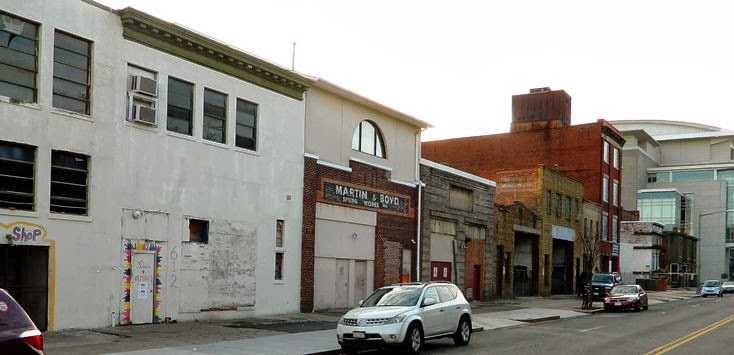
A yet to be "rehabbed" street in Shaw. Around 7th and L, NW. Close to the cop shoppe.

Growing up, a meaningful block was a half-mile long. Nobody walked much, so it wasn’t a big deal, but the distances between stuff were actual distances. Walking three blocks was a mile and a half. Distances were covered in miles per hour, thank you very much.

When I first moved to our nation’s capital, these were pre-GPS days–I know, right?, I pulled out the map to see where I was heading. It was on the other side of the beltway. Using my historical point of reference, I figured it would take about 60-70 minutes. It took me less than 20, and that might have included a little bit of time when I was lost.

Geographically, D.C. is a small place.

Today I told The Spouse that drinks were on me at the hip watering hole that just reopened. I decided to hoof it from downtown. The Spouse hit the pavement from The Mall. It’s a sign of the times that we would even consider walking. Five or six years ago, when the development was in planning, I would not walk that corridor. Boarded up shops, drug deals on corners, and no reason to be there. Nope. Seventh Street was a car route.

I walked the dozen blocks, passing the new convention center, spiffy hotels with five-story atriums, rehabbed buildings, shiny new box apartments, a grocery store with wine and a ton of prepared foods, and a few windows still boarded up. For now.

There were still the few blocks of subsidized apartments, but they’re much less notorious. There was still a cop going back and forth with a citizen. They were being observed by a sidewalk full of the neighborhood a few yards away. Nobody was cuffed. The convenience store was surrounded by folks waiting for the bus. The air included the smell of tobacco and weed. But no piss.

The city was always tiny, but now the walk from the FBI building to the burgeoning condo, bike path, coffee shop and restaurant fueled blocks formerly known as the hood and now known by their hip nicknames was much faster than a cab during Friday rush hour. In less than twenty minutes, office commuters can traverse to the land of brown liquor with artisanal ice, biergartens, craft roasted coffee, dog groomers and hipsters.

These thirteen blocks span less than a mile, not the 6½ that I would have expected in my youth. As the city gets closer together, it gets bigger for some people and increasingly inaccessible for others.

The Spouse remarked on our independent walks through what had been a tough area. I noted that there was new paint and landscaping at the public housing complex across from the shiny new grocery store. The rec center that had an awesome makeover was full of little and mid-sized kids that did not live in the new studio and studio +den apartments with the marble counters and stainless steel appliances.

We don’t want the city to lose the people who have raised generations of families here. Both of us, at the same time, said we really hoped that there was enough room for everyone. I better go call the Mayor.

Coconut Sorbet

A split coconut. That is all.

It was the last, albeit inadvertent, straw. I was walking down the hall—the one with the wood-lite, parquet floor versus the carpeted hall—to get a morning coffee. I think that my short, squat spiral notebook was in my hand. My phone was on top, but surely grasped by at least one finger. Until it jumped.

Like a squirrely, inelegant fish, it leapt from my pond. It somehow gained acceleration as it left my control. Maybe the wind from my gait? Regardless, it breached my hand and clattered to the floor and awkwardly slid, like that odd fish, along the floor. Poor fish. Poor phone.

It had been kinda cracked in a few places before, based on other unwitting tosses. Fissures on the edges, and just along those edges. Not a rupture in the main, and certainly nothing that interrupted function.

This time, it was different.

I picked it up. It had been on the ground many times. At least eighty. Perhaps as many as six-thousand, three-hundred and sixty-two. Somewhere in that range. So imagine my surprise, nay, my shock!, at seeing the sets of intermittent stripes and the faded Kodachrome reflection of what had been my wallpaper of my family affectionally giving me the finger. I swiped, and it seemed to work. I put my notebook and phone on the counter. I got my coffee.

After my minutes with the Keurig and the addition of milk, I retrieved my goods and saw that the phone was worse. Finger swiping had no effect. Pushing down on the screen made it a little brighter, but just a little, and it did not improve the capacitive response. When is the next iPhone release?

I was hoping to get another year from this device and the new ones aren’t due until late September. I need a working phone now. Like literally now. Screen replacement time.

Working downtown in a decently-sized, walking city means you are just scant blocks from a solution. I looked at the clock (not on the phone since that was a disaster) and the google and saw a solution within blocks and within the hour.

I dropped very carefully deposited my phone at the screen repair joint and was promised a fix in forty minutes. Great! I told the nice man, Jeff, who was jonesing for a transfer to this new store, I’d be back after lunch.

I very uncomfortably walked down the street. I would normally open an app on my phone to nudge my brain for food options. Instead I had to go naked. I headed south a block then east. The food trucks had good smelling fried chicken, but you know how I feel about them.

Lightbulb! It’s restaurant week and there is a famous chef restaurant that has a great riff on fried chicken and this was was the summer doldrums that spawned “restaurant week.” Three courses for a sweet prix fixe. I had the time and the price would be right. I was stuck using the DocThink GPS in my head, but fortunately it still worked. The dining room didn’t have a table for me, but there was a spot at the bar.

Somehow, sitting at the blonde wood bar and looking at the special menu, the idea of fried chicken seemed better as an idea. The yellow gazpacho first course seemed to be begging me to have the rare and peppered tuna on some “pepedille.” I know that’s not a word or a food, but the word on the menu was unknown to me. It tasted good, though.

I didn’t chose dessert until after my entree. If there was key lime pie or lemon icebox pie, it would have so been that. Hot lava chocolate goop sounded gross. Something with grapefruit and basil sounded too adventurous. The shortbread cookie thing a bit too pedestrian. So I zeroed in on the coconut sorbet with chocolate and almonds and something I can’t remember.

I’m not generally a coconut fan. Baby Bear, on the other hand, hashtag loves coconut [#lovescoconut]. Maybe I was missing him when I ordered that and a coffee. And I thank you, Baby Bear, because it was good.

As the bartender took away my dessert plate, we both opined on the terrificness, or is that deliciousness?, of the coconut sorbet. He told me that the Boss-Chef ate lunch at the restaurant three or four times each week and always, always, always ordered the coconut sorbet.

He would order one scoop and finish it and always, always, always order a second, which he would also dispatch in it’s entirety. One time, the bartender ordered him a second scoop in anticipation. He was upbraided. The Boss-Chef wanted to order it himself.

We wondered, together, why he ordered first one scoop and then the second. I wondered if it was because he didn’t want to eat melted coconut sorbet? But the bartender didn’t think that was it. It was a pattern, and it was his control over that pattern. Maybe he teased himself to see if he could resist the second scoop? Maybe he wanted to make sure he had the time to finish what was in front of him? Maybe he made up a game that nobody else could play?

I wondered why I would order one, and then the other. I wouldn’t, but it was a decent mental explore. Because the only way I could understand the Boss-Chef was to try and think about what it would mean to me. What are my tics? My sport that only I play for only my known reasons?

He was always challenging his patrons and himself. He said “In cooking, as in love, you always have to try new things to keep it interesting.” I like it when things are interesting. In the kitchen, and in other rooms, too.

He will be missed. Maybe I will go back and order a scoop of coconut sorbet. And then another. For fun.

Peace to you, Michel Richard.  I hope that your gifts are appreciated in this next life as I appreciated them today.

Good Forms

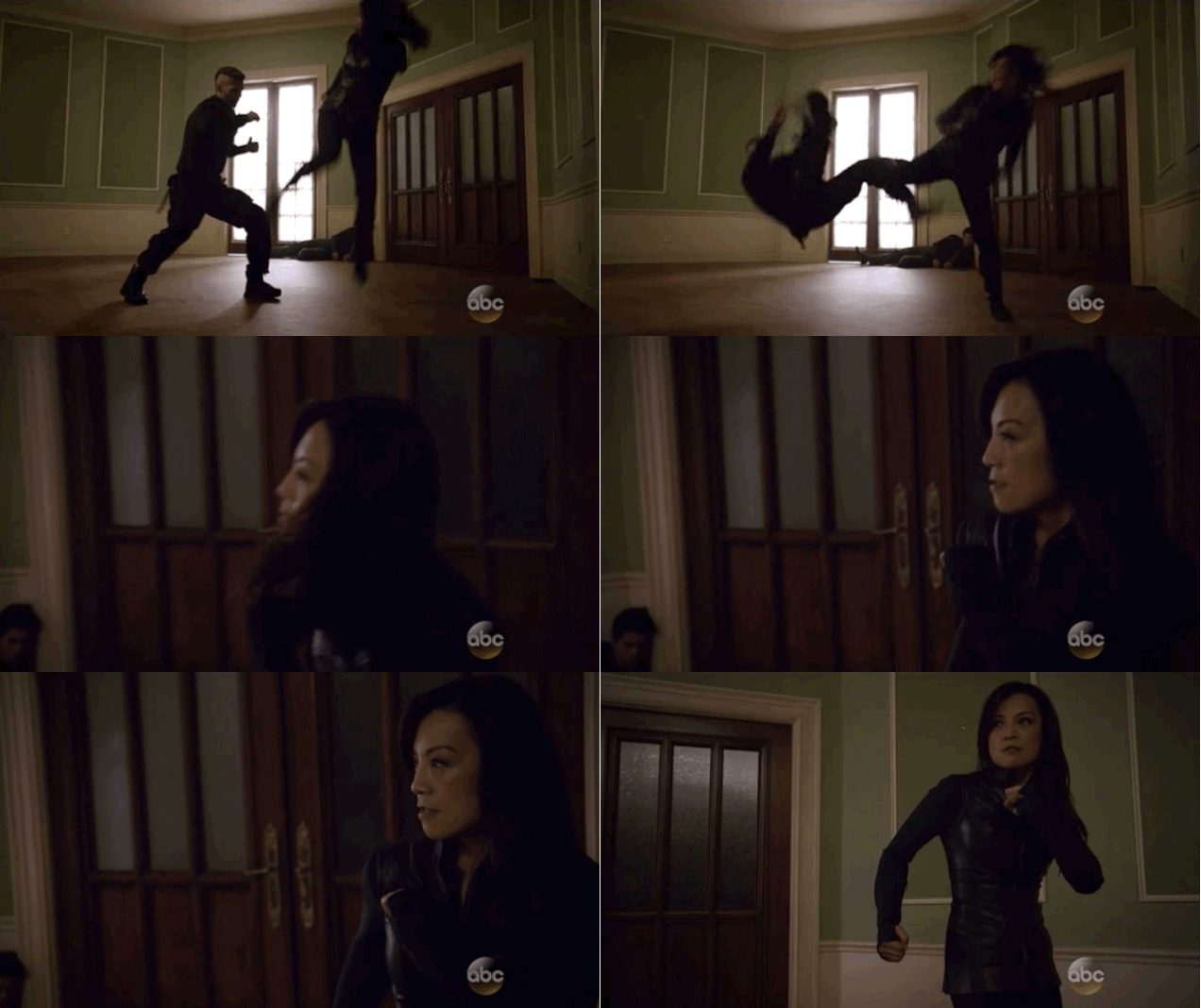
Agent (of S.H.I.E.L.D.) Melinda May uses her mad fighting skills to kick a bad guy. She's not hurt. She's boss.

The smell of french fries crossed the street on its own. It was actually the smell that conjures fries. More like the smell of the fryer. And salt. Not potatoes. The potatoes have no smell.

The lurkers on the sidewalk turned their heads in the direction of the scent. Some looked more plaintively than others.

There were two types of yearners. Some were hungry, either because they didn’t eat dinner yet or because every time they smell fried food they wanted it. There was a subset of this group that were both. They were the most dangerous.

Others looked longingly when the door to the tavern opened. They could almost see the outline of the polished wooden bar. The welcoming stools waiting for a perch. The pours lined up and reflecting off the back mirror. They might be interested in the fries, too. Salt to wash down the spirits.

Yet they remained posted up in front of the dual storefront. There were scores of square feet of glass. There were three short rows of metal chairs closest to the doors of each store. Mostly moms sat in. Mostly dads stood outside.

The moms on the inside might spend time on their phones, but as the weeks of class wore on, they knew each other. They spoke about the trials of homework, mismanagement of time and the concomitant fines, inequities at work/home/country and their pride in their offspring. The dads on the inside were primarily silent but observant. They were tracking the progress of their progeny purposely. They knew the color sequence of the belts.

The few women outside were either sitting in strategically parked SUVs or smoking a cigarette. The outside dads milled around. A group discussed the Redskins practice and hopes for the preseason. The sole–and loud–Cowboys fan was there to be razzed. And he was. The outside moms didn’t track the inside. The outside dads would frequently glance over their shoulders and mark their kids.

The inside parents ensured that all belongings were accounted for, stuffed in backpacks or purses or bags. Most outside moms followed up. The outside dads who limousined the kids every week were on top of it. The dads who were intermittent chauffeurs asked the kids if they had everything. The kids always said yes. Sometimes they were mistaken. Sometimes there was a trip back to the storefront. Sometimes there were later recriminations. Less in the summer. More during the school year.

Just the one dad would take his kid across the street after class. The dad would order a beer he liked. The kid would have orange and cranberry juice with a spritz of club soda, a cherry and a single drop of bitters. They called it his cocktail. The dad and his kid would split a fry. And the kid talked up the bartender and learned to tip, too.

Once in a Lifetime

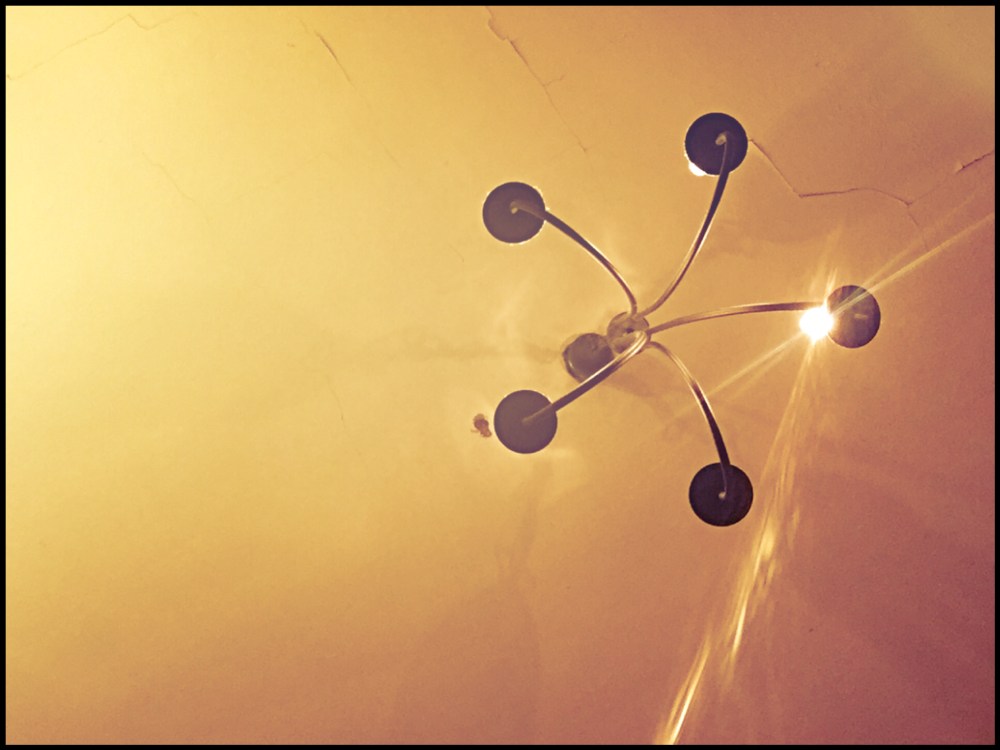
Look up. At the light. From the ceiling.

Yesterday a woman threw herself. Some say that she dove. I didn’t see that. I saw her hurtling her body to cross that line first. And she did.

I find people who do not appreciate her effort to be missing the point. She came to win. She was excruciatingly close. I felt excruciated for her. She may have won the race without resorting to a headlong fling and the attendant skinned knees and arms. Maybe not. Shaunae Miller, of the Bahamas, literally put her whole self out there in the 400M. She was there to win, like all the athletes. She went extreme.

Another woman put all she had out there to win. Oksana Chusovitina of Uzbekistan competed in her seventh Olympics. The first was in 1992. She’s 41 years old. For number seven, she not only qualified, but competed well enough to be a finalist in the individual vault competition.

Hers, like all gymnasts, is a skills and math problem. If you have the ability to pull off a very hard vault, your rewards spiral upwards via a formula. More hard = more points. Chusovitina knew that her competition’s knees were younger and springier, but she wasn’t in Rio to observe. She was there to medal. Her strategy ? Do “the vault of death.” Seriously. It’s a vault that her lithe, fresh rivals think is too dangerous to risk. But harder increases point potential. Gauntlet thrown. She didn’t hurt herself, nor did she medal. But Chusovitina laid out everything she had. She didn’t just come to play. She came to win.

I got chills watching Miller’s dive at the finish. I held my breath and found myself on my feet clapping as I saw Chusovitina fly, flip and flame. These, and so many other athletes, are the reason that I watch the Olympic games. To see the determination and the drive of these Beasts. Some are going to win. Some are going to lose. But every athlete is there to reach their goal. Not to try, but to do.

I find myself asking, “Doc, what do you want? What will you do to get there?” Win or lose, make it count. Same as it ever was. Same as it ever was. Same. As. It. Ever. Was.

Storm Chased

A mean storm meeting a beautiful evening sky. Run!

It was time to go. She looked along the row of desks to the window next to the wall clock that evidenced the time. She got stuck on the window. She wasn’t running late, but it was dark. She walked past the empty desks to look outside. Everyone in her aisle had already left. Slackers.

Her eyes scanned the sky. It looked like it might be getting ready to storm. Like an August squall kind of storm. In the heat of summer there are spates of mini-monsoons, sometimes four, five or six days in a week. These are expedited events. Storms that when you beat them home, you’re dry. And if you don’t, you’re wading ankle deep through a tiny flash flood roiling at the storm drains at the intersection. The latter is a bit gross.

She shut down her Pokemon session that had been running amiably in the background all day. There were a few pokestops near the office, and someone(s) had been setting lures. No walking but much catching between emails and meetings.

She swiped over to the weather app. It displayed a current temperature of a comparatively mild 88°F. Rain wasn’t forecast for another hour. She’d be home in half that. Quicker if she took in fewer steps and high-tailed it to the closest train station. She grabbed her backup umbrella, just in case. She put it back in her cubby. She wouldn’t need it.

She looked up at the window again and thought better. She plopped the tiny orange umbrella in her bag. It didn’t take much space, and better to be prepared. The app said No. The sky disagreed. She was going with the non-virtual reality.

She optimistically put on her sunglasses rather than her inside peepers. She placed her sunhat on her head–easier to wear than to carry even though she looked ridiculous walking into the premature evening decked in sunwear–and pushed through the two sets of doors to the sidewalk.

She had been out at lunchtime when it was plenty hot. The vestiges of that hot was on the metal and glass of the doors. It rose from the sidewalk through the soles of her shoes. It was still hanging out in the thick air. She turned toward the corner and her hand flew to her head, to keep her wide brimmed straw chapeau from lifting off her head. She turned to a stranger at the light.

“Wow! Now that’s a cold front.” The woman next to her took in the floppy bonnet, looked up to the blackening sky to the west and grinned her agreement as she scurried across the street. The light had changed. All the commuters on the sidewalk were dashing to their next stop. The wind was cold. And pushy. It was a warning.

Her foot reached the sidewalk on the other side of the street. She looked up, again, to her right. The clouds were moving, and getting darker. There was a definite border between the stormy side and the calm side. The stormy side was encroaching, though. There wasn’t a  referee to throw a flag and make it organize itself according to the rules.

She saw the man who spent the day on the street packing up. She somehow knew he didn’t sleep on this street, but she had never seen him leave. The wind was motivating him.

She stopped every eight or ten steps and looked back at the sky. She saw a flicker of lightening and heard the thunder. She mounted the top of the escalator and descended into the subway and boarded a waiting train.

Her car came out of the tunnel. Damn. She was losing the race with the storm. The line of blue sky and fluffy white clouds was behind her, behind the train. Before her was a dark, rumbling and angry sky. Looking over her left shoulder she could see the reflection of sunshine. A caldron of something wicked this way comes to her right.

The conductor warned the people on the about the weather conditions. “Use caution on the platform,” he entreated. She dismounted from the train onto the bricked walkway. She smelled storm. They say it’s ozone. The sky cleared its throat like an old smoker.

It wasn’t raining now, but it just had. People stood at the edge of the cave that opened into the elevator well. She pulled out her little umbrella and released it from it’s little bag. It wasn’t quite raining. Not yet.

She held the umbrella above her head that was covered by her sunhat. Her sunglasses and staw hat looked silly underneath the short-sticked, orange umbrella. Nobody noticed. If they were under the overhang, they were looking up. If they had left the station with her, they were looking to get out of the rain. Some went to the bus bays. Others to the kiss and ride. She and some others walked along the sidewalk to the intersection.

There was a flash and a boom. The lightening and the thunder were concurrent. The storm was here and now. She ran a few steps, and then the rest of the block. She wondered if she could minimize being struck by lightening by running. It couldn’t hurt.

Going home meant going toward the bright part of the sky. Maybe if she hurried–another reason to run–she could leave the storm. Her house seemed to be underneath the clearing. The rain was hitting the cover above her head with more purpose. It was still fairly light. Another flash and another deep grumble from the sky. She skipped over the curb and flew to the next corner. The next flare lit up the street. The thunder was quick to follow, louder, longer and lower than before. She saw her house and squared her gate to be greeted on the porch by a big dog and a man.

He laughed at her sun and rain gear. She closed her umbrella and the sky opened up and poured rain. She was home just in the knick of time.

Hobby on the Edge

A super yummy sushi dinner.

The Spouse has a new hobby. It’s not as much a hobby as a skill building process. You could even say he’s honing a new expertise.

He approaches his lessons with surgical precision. He’s carved out time to sharpen his approach. He steels himself against what seems like a stone wall. He’s not quite shaving time from his efforts, but that’s not the point. Getting better means getting sharper, not quicker.

He whets his implements across the strop. He uses water to give himself that extra edge. He polishes and finishes to bring out the best of his tools.

Okay, let me cut to the chase. He’s assembling a collection of the gadget and gizmos utensils and devices to bring the fineness to the blades of knives. He has spent hours sliding the steels agains the stones and then finishing with a leather barber’s strap.

It’s an odd accoutrement, but the craft means that our knives are sharp. Then he shows off by skillfully chopping and slicing food. Like the beautiful tuna, and the paper thin cucumbers. And he provided me with an extended bad pun for today.

Sorry.

Close Cover Before Striking

Public handwashing. Not handwringing.

So there’s this interesting new bar and restaurant design. It’s not about tap placement. Well, not  in a traditional view of bar taps, that is.

It’s not about the relative space of standing room to table. It’s not about the frenzy to biergarten-esque shared space. It’s not about $15 craft cocktails with artisanal bitters and homemade tonic. It’s not even about beers that taste like the ripe sweat wrung out of a summer half-marathon runner’s shorts.

Nope. It’s about the john.

In paean to efficiency, privacy and the quagmire of single-sex bathrooms, new joints are opening up with a cluster of individual water closets with toilets and, frequently, baby changing tables, to serve the tail end of customer needs. There are a series of doors, could be two, could be eight, that open into a lobby of sinks, all to better wash one’s hands after doing one’s business.

Gone are the days when The Big Guy and Baby Bear would lament the lack of personal hygiene of their bathroom cohorts. “Doc, the guy DIDN’T WASH HIS HANDS!” (Frankly, I was always pleased to hear this. It made me believe that they were washing theirs.)

Gone because, now, everyone can see the water and soap action of anyone leaving the toilet. I especially like seeing the signs above the sink exhorting employees to do the right thing. Now, we all know. Anyone can see. Hand washing has become more public.

The data was there; three in five folks have observed others not washing their hands after peeing or pooping. And one in four people don’t use soap. Eww.

So now, given the public commons for handwashing, there’s a new way to publicly shame people. Guys, women are watching. Women, we all know. Watch your fellow patrons leave the water closet and see if you can make them wash their hands with your disapproving eyes.

Frankly, you should have been doing this all along. Just wash your hands!

Enchanté

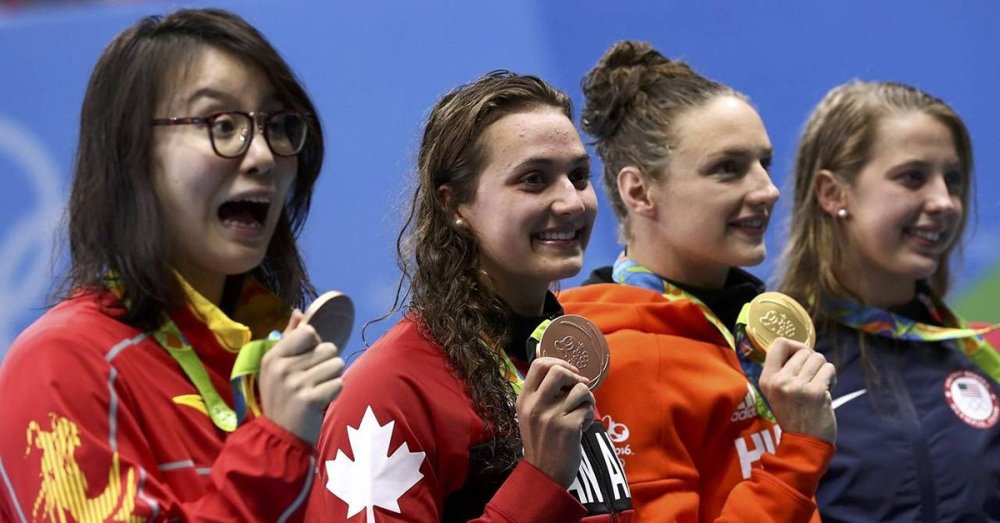
Medalist in the 100m backstroke, Fu Yuanhui (China) Kylie Masse (CAN), gold medalist Katinka Hosszú (Hungary) and (USA) Kathleen Baker.

You win a gold medal at the Olympics, you feel joy. You stand at the podium with any medal around your neck, there is joy. For many athletes, finishing their event brings joy. They are achieving long-standing goals. They are competing on an elite stage.

There is the inevitable local news coverage after an event. Athletes–especially athletes from big national news markets–are regularly prepped with words of wisdom and platitudes. To say the right things, thank the right people, to be poised and humble, and to certainly hold your hand in the correct position when your country’s national anthem rings out.

The strongest expressions of joy you see is a fist pump or an air box. You see beaming ear to ear grins. You see teammates gripping each other in bear hugs. You see overwhelming tears of gratitude, relief and, perhaps, joy. Once you saw someone take off her jersey and fall to her knees. That was an unusual, unscripted and primal display of joy. It was the exception that proved the rule. Pump, grin, hug or cry. Those are the acceptable norms.

And then you see the pure and unabashed joy of Chinese swimmer Fu Yuanhui. She is most definitely having a good time. It’s as if she was never given the advice to “act like you’ve been there before.” She’s not acting, she is being.

She was blatantly amazed and pleased by her bronze medal swim. She learned of her time from the interviewer and brought her hand to her wide with surprise mouth. She as much as said, “I swam that fast?!”

She hops up and down like a kid on Christmas morning, all the time. It’s like she’s acting out. Acting out her very huge feelings of glee and the soaring of her heart. At least for this Olympics, she’s not willing to tamp down any of her feelings of wonder and delight.

I could watch her most natural joie de vivre during every Olympic break. She loves being there, and she loves sharing that in the most obvious ways. You don’t need to interpret her. Why hold back, she asks us all? Don’t act like you’ve been there, act like you’ll never be back.

Damn, I love this woman.

Trickle Down Effect

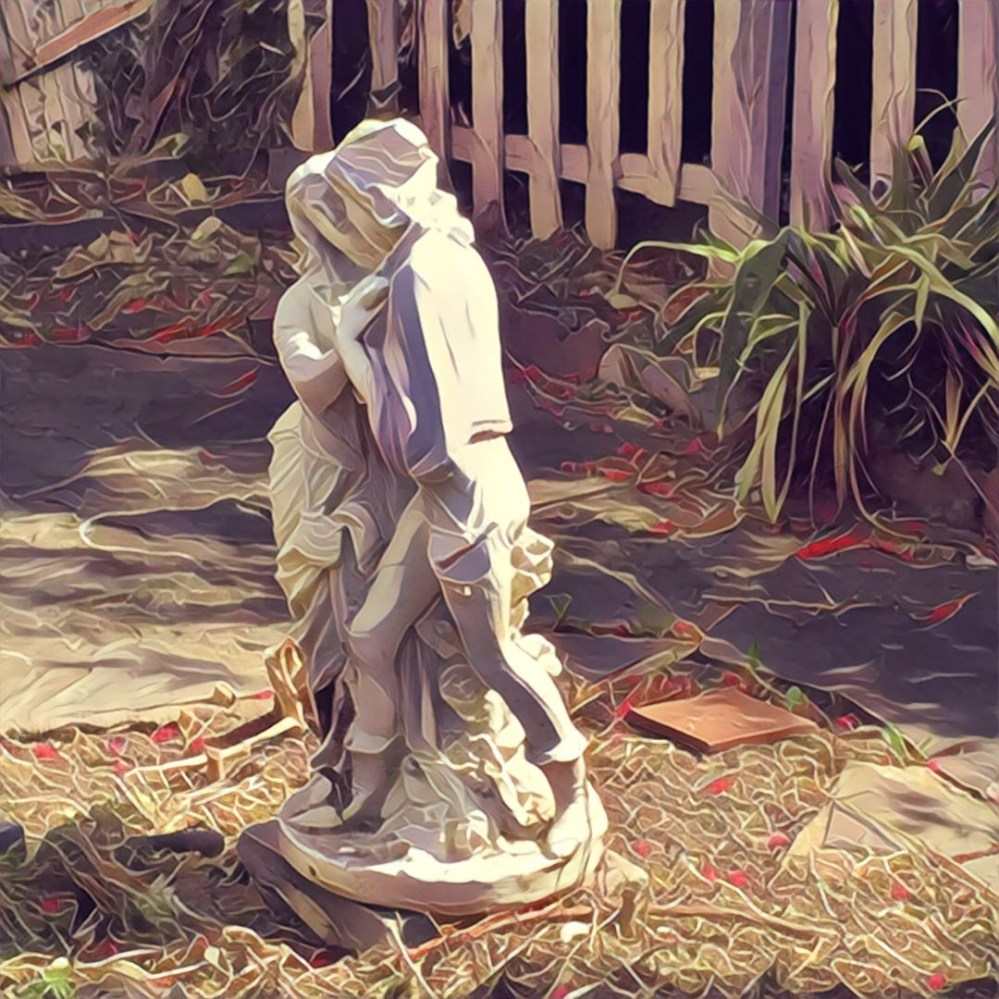
Here is a pic I took of a garden statute in someone's yard as we were taking too long a walk on too hot a morn.

Drip. Drip. Drip. But not fast. Very slow.

Well, the first drip is slow. It creeps along the bridge ever so reluctantly. You almost feel it, but then you don’t. You’re not sure until it’s about two-thirds the way down. Then it snowballs a bit. That’s kind of funny because snow is the opposite of what you’re experiencing.

As the saline solution reaches the end of the bridge, at the tip, you feel it accumulating. It isn’t really heavy, in a way that it creates pressure. It’s more like a swelling. It is amassing. Gaining enough mass where you can begin to see it if you almost cross your eyes. It is becoming a drop. A bead of sweat. That will drip. Right off of your nose. And you’re not working out. You’re just going about your business.

It’s 91°F and the humidity is 60%. This calculates to what is called a Heat Index of 102°F. The other phrase for Heat Index is Feels Like. In this case it feels like it is too hot and your body is leaking.

The water is almost hanging from your nose. It feels like that minute as the Olympic divers stand on the edge of the platform, facing away from the water and just before they hurtle themselves in the air in twists, turns, pikes and tucks to meet the water. Their hands are clasped together as in prayer, but they use this spear to slice into the water for a splash free entry.

But you? Your hands are no help. They’re otherwise occupied. You’re hand deep in dirt, or you have two hands on the leash, or you’re carrying two bags of groceries and a twelve pack. You can’t brush the water away, even though it is annoying you. You both don’t want it to drip and can’t wait for it to release. You won’t shake your head to get rid of it.

Turns out you are now waiting for it. It’s an uncomfortable, yet delicious, anticipation. You stand still because you know it’s so close. So ready. You lean your head a bit away from your body and watch the pearl fall.

You lose sight before it hits the ground, but the next bubble is already beginning its slide. You brush this one away, either using the back of your hand or at your shoulder. But it doesn’t matter. The drips are backed up like O’Hare after a wind shear. They will come one after another now.

Your hands are still occupied, but you somehow reach for the key to step into the dark, cool house where you will splash your face with many many many drops of cool, salt free, water and dry yourself off. A sigh of relief will slip from your lips. You shake your head.