Uniform-ity

This slideshow requires JavaScript.

I had a friend in college who had a dilemma. She was in charge of the placement of students in her progressive non-profit. It was part of a great program where students could earn a real college credit by doing real work for real student orgs.

One of the people my progressive friend interviewed was really excited about the work, had some relevant experience and a lot of energy. The problem? She was wearing a pink, crew neck, shetland sweater monogrammed with her initials and, even if not actually wearing a string of pearls, she sure seemed to be. She was preppy or, at least, she looked it.

We fighters for right derided the fraternities and sororities. They were experiencing a resurgence after a decade of withering at a very progressive campus. Folks working on economic and environmental justice, consumer choice and fairness literally had nothing to do with the Greeks on the hill. We didn’t go to the same parties. Didn’t hang at the same bars. Ate from different troughs. I’m sure that they were in some of our classes, but there was an unspoken demarcation in the classroom. Defined by their uniforms.

So the preppy young woman didn’t belong in our organizations. And my friend, from an eastern boarding school background, was torn. She wondered if Pinkie was worth the risk. I remember looking down at myself. Plaid flannel shirt, worn Levi’s and hiking boots with fat lugged soles. My friend had the same garb. Men and women on the reformist left, all wearing the same uniform.

What we wear, our hair, jewelry and makeup choices, is part of our identity and part of our communities. It can help us find other members of our tribe. And it can also shut us out from others who we don’t recognize, or worse, folks we assume we won’t like.

There was a discussion spawned by a piece that Barnard College president, Debora Spar, wrote in the NYTimes about her tribe,

a particular subset of the city’s elite — the powerful women of a certain age, mostly from the news media and politics. The men wore Hermès ties and as much hair as they could muster. The women were uniformly thin and dressed in short dresses, usually black. A Clinton was spotted and appropriately fawned over…”Every…woman there was over 60 and yet there wasn’t a wrinkle to be found. They all looked great, but so similar!”

Spar writes how she fights with herself to be herself and not fall into the trap of chasing youth through hair colouring, botox, nips and tucks. The discussion part included women who belong to a different tribe, like this 72-year-old retired pediatrician,

I don’t know what circles she moves in, but the wonderful, talented women that I know and work with do NOT go in for tummy tucks and Botox. A few colored their hair for a while (I did not), but most have realized that hair with no gray looks pretty silly on someone with significant wrinkles.

It is clear that Dr. Retired does not know Spar’s circles. She clearly moves in another. And is quick to judge from her spiral of natural hair. I bet some in those NY elite circles would think her frumpy or wonder why a woman of her caliber just let herself go.

Another commenter, Ms. Seventy from near Harvard, actually nails the issue, albeit backwards and inadvertently.

Ms. Spar’s is a problem, perhaps, for folks who go to white wine kiss-kiss parties. For many of the rest of us, age brings a welcome opportunity to opt out of the youth-oriented, body-perfection vision of beauty. When I go to the theater in Santa Monica, Calif., I’m the only woman of my age with gray hair. In Cambridge, Mass., at 70, I look pretty much like the rest of my age mates.

Yes, Ms. Seventy, you are correct. As you note, there are different tribes and different standards. But then you go and get all judgey, too. Lemme ask you this, why do you think that looking the way that YOU want to look is better than how your buddies in Santa Monica or Spar’s elite NYC colleagues want to look?

It’s just different.  Go ahead, wear your uniform with pride, but don’t deride the other team’s.

And for those of you who got this far and were wondering, whatever happened to Pinkie? My smart friend selected her. Pinkie turned out to be a most excellent contributor to the cause and a recruiter for others in her home tribe. She taught us all. A lot.

First Affirmative, Second Negative

varsityletter

I debated in high school. I was better than decent but not excellent. Debate was the activity that best prepared me for a competitive school.

When I got to campus, I discovered that my classmates–from fancy eastern boarding schools and superlative public schools in Shaker Heights–already had college credits. I was all like, “Whuh? You can do that?”

Who knew you could take some tests and walk in a semester ahead? Not me. There were plenty of things I didn’t know. Nobody in my family had been to sleep away college.

But I did place out of freshman comp, unlike 93% of my classmates. Because I debated. The frosh comp graders looked for clear structure and organization. I knew how to quickly form an argument, create an outline of support and evidence and deliver a conclusion that summed up.

Traditional high school debate is all about ideas. It works like this.

  1. Somebody #1 makes a case of ideas using a bunch of evidence that they cite, chapter and verse.
  2. Somebody #2, in the opposition, directly responds to the ideas of the first somebody. #2 answers #1’s ideas directly. All of them. Each of them. If they don’t directly respond to an idea, they lose that point. Evidence is key here, as well.
  3. Somebody #3 presents a case that fixes the issues that Somebody #1 identified at the start. Backed up with evidence. This evidence thing keeps coming up.
  4. Somebody #4 tears the case down. More evidence.
  5. They rebut the case and the case for the case in the same order. And they have to at least mention all the prior arguments. If not, Somebody #4 comes up and says to the judge, “The First Affirmative did not address the ideas of my partner so they all carry for us.” That’s always cool. You can totally win on that. We did. More than once.

So there is a structure and points and usually a definite winner and loser. Reputable evidence is key. Sometimes you’d win a point over a “fact and citation battle.” (I know, exciting, right? We didn’t call it that, but that’s what it was.) One year I had an evidence card that cited the NE Journal of Medicine. It was during a year with a law enforcement topic. Nobody else went to a medical journal. I won maybe five matches on that one highly destructive fact from a legit source. Boom!

This is not how presidential debates work. There are questions, but the answers don’t address the questions. There are right-turn pivots to a point the candidate would prefer to talk about. Dropped arguments litter the stage, nobody picks them up. Well, maybe the sad moderator tries to put them back in play. It’s futile.

And evidence? Definitely not required. And definitely not required to be sourced. Say what you want. Say it again. Interrupt. Make your same point. Be aggressive in the face of a contradiction. Introduce non-sequitur, ad hominem attacks on your opponent. Light the dumpster on fire.

I wish they would chose another name. It confuses me. This is not a discussion about ideas. This is not a debate. But there are winners and losers.


Selling Fields

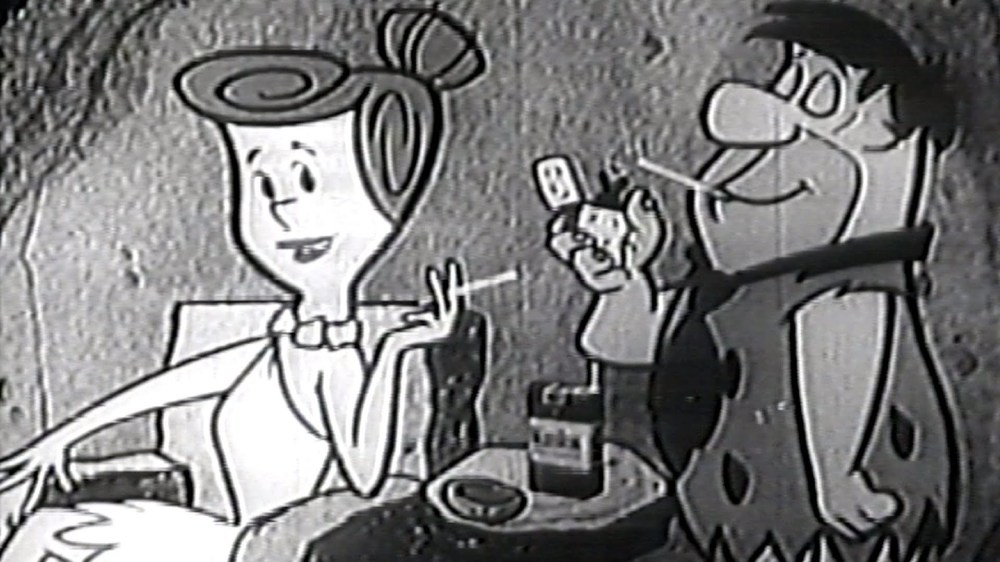
Wilma and Fred smoking.

Sunday. Football Sunday. I’m sitting in front of the TV all day watching huge men perform great–and less than great–feats of athleticism while throwing their gigantic bodies at each other. With every game, every time out and during many changes of possession a series of ads play. What do people who watch football buy? What is Madison Avenue selling this fan demographic?

Fast food. A lot of fast food. My arteries narrow in a Pavlovian response. Goopy cheesy pizza, thin crust, deep dish, carryout and delivery. Actually, almost all of the fast food ads are about cheese. Cheese burgers, cheese fries, cheesy tacos. I guess football fans are not lactose-intolerant.

Cars! Cars! Cars! There are two types of car ads during the games. One is about the facts, the quality and safety features of the vehicles and the third party awards and validations. Cars in these ads hardly move. Then there are the emotional ads full of vistas including purple mountains majesties with twisting roads and fruited plains being crossed at high speed. These include old songs that evoke times of freedom for baby boomers who can afford luxury SUVs.

Stupid scary TV shows. The networks use their free airtime to try and get folks to wach their stupid and scary TV shows about serial murders, tortured children and other kinds of murders. Also some ruthless buisiness moguls who surround themselves with people in slinky, shiny golden lame. Do people wear those clothes in the office?  Networks don’t try and sell many funny shows. Just scary shows. Or maybe just fear.

Networks. Lots of ads about coverage and likes and panoramas of new phones encouraging football fans to switch to a new wireless providers–either because it’s better or because it’s the same. I’m not so sure about the reason for switching for more of the same, though.

Containers. There’s a smattering of beer ads. Not as many as I expected. The focus is on the cans. I guess the look of the can is more compelling than the taste of the beers they’re selling.

Financial instruments. There are insurance ads–most of which do not make any sense and are trifling. There’s also retirement investments. Does football make people feel mortal? There’s also meds for boners. I guess football definitely makes people feel mortal.

The Truth To Set You Free

A statue of Thomas Jefferson in front of piles of bricks. Each with the name of a person he owned. ugh.

I was buoyant to be part of the preview crowd at the soon to open Smithsonian National Museum of African American History and Culture. The museum, as it slowly grew into it’s stacked corona on the Mall, grew on me. My companions in line said the same thing.

You can read more on the Museum here, here and here. This is not a review, though.

This is some raw thinkings delivered by a museum that riled me raw. After the party.

The party was awesome. There was a DJ and a hype man. Their day jobs are providing security at other Smithsonian properties on the mall. Tonight, they were party starters. They spun tunes-opening with Celebrate by Kool and the Gang which made me all nostalgic for my Sibling’s wedding as her new brother-in-law loosened his tie from his tux and pranced around the dance floor with a bottle of champagne in each hand–and asked the crowd (which was huge given there are just 200 employees and this was a family event, but the more the merrier when you’re celebrating) to hand dance and Wobble.

The dips and finger foods were generous, but the exhibits beckoned. That’s why we were here. I took the elevator down a few stories to a deep cavern which leads visitors through American history via the lens of African Americans. You follow an ascending ramp back up to the main floor. There is much to see and feel and think about as you walk the corridor.

There was part of one wall that told the horror story of families broken up on the auction block. In particular, the  curators related the story of a woman who was being put up for sale who refused to let them take her child. Take her child away from her. Out of her arms. This was her baby.

As she screamed and held the baby dear, she was lashed by a whip. Still, she held on to her sweet child. And, still, she was beaten by the people who were going to sell her. And sell her child. And the bastards wrenched her heart, her precious baby, from her arms. This horror was depicted in an ink drawing.

As I turned away from the canvas, I saw a man. He was a father. His skin was the same shade as the mother in the drawing. The woman who was for sale. He was holding his sweet baby in his arms. I can’t stop thinking about him and his family, and the woman and her family from hundreds of years ago. And thinking about progress and the journey that we are still on as a country and as a people.

My mind is racing and boiling and roiling and recoiling. And thinking. More thinking.

Expiration Date

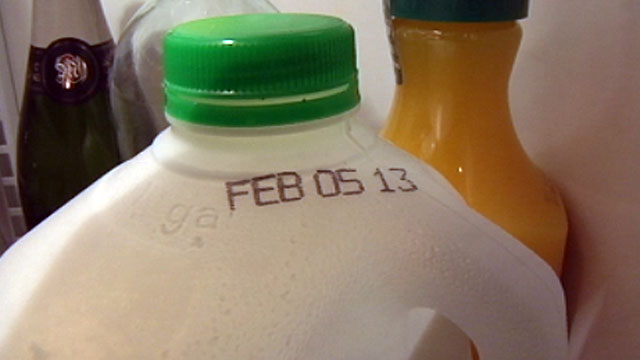
Expired milk, dated February 5, 13

We all have an expiration date. It’s not public like those on milk, meat or medicine.  We don’t know what that date is, and, despite a few exceptions, there aren’t many clues.

We can look at mortality tables and sort for age, income, race, education, hereditary risk factors, geography, smoking status, BMI, you name it. You can see gross patterns, but that doesn’t give you an idea about an individual.

You know, the obese, diabetic smoker who had two heart attacks and continues to cantor at her church into her late seventies? Or that amazing teen baller with an undiagnosed heart hiccup–undiagnosed until he dies on the court that is.

Even people with what have been considered death diagnoses can beat their odds. See, for example, Stephen Hawking. See also, for the converse, Iron Man Lou Gehrig who played every game for 17 years with the Yankees before succumbing to ALS at 37.

We know of non-smokers dying of lung cancer and heavy smokers living a long life. A brain aneurysm can strike at anytime, and don’t get me started on accidents.

30,000 people will die in a fall. 33,000 in a vehicle. 38,000 will be accidentally poisoned. Some people will get hit by a bus. Some will be caught in the crossfire from a shooting. Some will simply not wake up. Nobody knows why. And nobody knows who. Or when.

Like in finance, past performance does not necessarily predict future results. Bottom line, we’re all going, we just don’t know when.

On the way to going, people get sick. Could be a cold, hypertension, zillions of different infections, heart disease (the #1 cause of death), auto-immune diseases, cancer, muscular degenerative diseases, I dunno, look it up. Lots of ways to get sick.

And when people get sick, they are not necessarily debilitated. People can have cancer and undergo treatment while minding their families and being productive at work. One colleague went through weekly chemo treatments for breast cancer for months and only she and our boss knew. She soldiered on. And anyway, being sick–even a very serious or a chronic condition–doesn’t equate with mental incapacity.

So, I’m wondering, why does anyone need to know intimate details about a President’s health? We do know that the sickly Franklin Roosevelt died in office, during his FOURTH TERM, after leading us through the Great Depression and a pretty big War. And did the maladies of John Kennedy make him a lousy president? Would we have landed on the moon if people had a copy of his physical? I don’t think that the Constitution requires our president to wrestle bears or chop wood or ride horses to be leader of the free world. Really they just need to be 35 and born in the U.S.

Journalists, and others, have been hankering for more information from current presidential candidates about their health. But stepping back, what does that tell us about their policies or decision making? Pretty much nothing. It’s a snapshot in time. It doesn’t stop a heart attack. [Ask former one heartbeat away from the presidency VEEP Dick Cheney.]  It doesn’t stop a bullet. It doesn’t stop the effects of Alzheimer’s before it’s detected. See also President Reagan who was reelected after being shot.

The out of proportion focus on medical records is ultimately an ableist point of view. It doesn’t recognize that people with different abilities, different health profiles and different health risk factors can be effective leaders, too. I think it’s a huge stretch to argue that someone so sick that they wouldn’t be able to perform the duties of the presidency would pursue that responsibility.

But even if they did, we have an entire process to manage it. It’s called the 25th Amendment to the Constitution. It clarifies all sorts of presidential succession issues and even allows that if the VP and the Cabinet believe the president is losing it, the VP can temporarily take over as Acting President. If they have a fight, because the president disagrees, Congress makes the final call.

So we got it covered. It’s all good. Move along. There’s nothing to see here. Just a bunch of much noise about nothing.

P.S. I’m looking at the data from CDC, turns out that 57,000 people in the U.S. will die of the flu and pneumonia each year. Get your flu shot. It just might help.

Further and Close

The Potomac River breaching the park to the bench.

It starts just below my breastbone. It’s very localized, in my chest. It’s a time when I recognize my heart is a muscle. It tightens.

Heat radiates from that beating muscle down toward my tensing stomach. And I feel my throat close a bit. My nose begins to swell and my eyes itch. Almost itch.

I fight back with a deep breath and it all subsides, just before it spills over into tears.

It happens again and again today. From the first reminder on a screen in my hand, through interviews on news shows and sprinkled liberally in football coverage.

Over and over I push it aside. I struggle through. I feel the hurt. Of watching the towers fall again and again. Seeing the smoke from the pentagon over and over. Listening to the reading of the names. Names of those lost, the innocent and the brave. Even after fifteen years, it still cuts. It still shocks. It still hurts.

In remembrance of all that was lost that day. And our search for peace.


Abetting the Deplorable

A rain spattered windshield at DCA. You can see the tower.

I hate taking cabs. Really I hate taking cabs by myself. Really I don’t like a stranger driving me home.

The stranger that picks me up at the airport after a late flight. The stranger that is surprised that a nice Doc like me lives in my neighborhood and wonders if I don’t feel scared and asks how do I like living as a minority?

This is the script that more than one white cab driver recited. I get in the cab, tell them my address and the quickest way there and then they start talking some racist shit like I’m in their bigoted white people club just waiting for the safety of their cab to go all KKK with them.

And I just look out the window while trying not to respond in a way that will either encourage him or insult him. The former because I want him to stop. The latter because he is driving me home and it’s dark and I don’t want to be dumped. This was especially terrifying before we had cell phones. I felt vulnerable. Oh hell, I was scared that he’d force me out on the sidewalk in front of the cemetery on Lincoln Road. I’d be a ways from home without much chance of another cab coming by. They didn’t want to take me home, to my nice middle-class neighborhood, in the first place. And don’t call me ridiculous because anyone who easily and safely spouts dehumanizing and vile comments could just be bilious enough to do something else hateful.

So I wouldn’t say anything to offend the racist in his rant. And I likely made it seem that I, at least, didn’t disagree with him. But I did. And when he pulled up in front of my house, the blue one with the white picket fence that was even brighter under the reflection of the street lamp in front, I would get out of the car as fast as I could. I learned to keep my roller bag small and next to me in the back seat so I didn’t have to wait for the intolerant asshat to open his trunk. I wanted to be away from him and his ilk as fast as I could.

I always felt complicit, though. I felt like I should have told him that I wasn’t a member of his intolerant club. That his racist insinuations–or sometimes a full rant–were deplorable. Instead, I learned to interrupt him as soon as he brought up his surprise at my address. I’d tell him how lucky I was to live in such a wonderful neighborhood with such terrific neighbors.

We are the company that we keep.

Sinners and Saints

Saints in stained glass.

I am definitely a lapsed Catholic. I just need to put that out there. I talked about it before.

But I am a cultural Catholic through and through. Catholicism was my conduit into faith, and spirituality. It was also my baptism for ethics and morals. I am a big fan of Jesus. Super big fan. For realz.

I was conflicted by my draw to Pope Francis as he visited my fair city. I think I give him too much slack, on the basis that he’s not totally awful. Actually, he is frequently brilliant. No need to pull out that old Catholic guilt. But that’s not today’s story.

To be truthful, Catholic news grabs me and makes me look. Because lapsed or not, it’s my identity. I get it. It made me. I embrace much more of it than  I reject. Even though I’d intellectually like to reject more. But I am not of the majick view of religion. I am of the philosophical bent.

Anyway, today’s big news, the induction of Mother Teresa into the Catholic Church Hall of Fame, also known as canonization into sainthood, stood me at attention.

Being inducted into the club of Saints isn’t like the yearly ceremonies at Cooperstown, Canton or Cleveland. No, there is not a regular rhythm of nominations and voting. But there is a process. And an officiating body, the Congregation for the Causes of Saints. This almost sounds like a J.K. Rowling invention. But it’s real. It’s a  department in the Catholic Church that makes recommendations to the Pope on saints. I am not making this up. Seriously, look it up.

There is a five step process to become a saint.

  1. Step one: Wait five years after you die. This is to minimize the emotional push to sainthood. HOWEVER, if you’re super popular–like a recent Pope–you can get a papal dispensation from this requirement. So much for a sober choice.
  2. Step two: Become a servant of God. This means that your local Bishop thinks you’re worthy and petitions the Congregation for the Causes of Saints to open a case. If they say okay, you’re an official Servant of God. But the Bishop has to vouch for you.
  3. Step three: This is where the Congregation for the Causes of Saints does their own legwork to see if there’s proof of a life of “heroic virtue,” and getting the Pope to agree. Passing through this gate means you are now venerable, but not yet a saint.
  4. Step four: This one is called beatification. This is some hocus pocus stuff,  AKA verified miracles. A modern example is someone is miraculously cured of some disease after saying your name in a prayerful way. This somehow proves that you are in heaven. That place in the clouds, just on the other side of St. Peter. Super holy ground. And you are now at stage four.
  5. Step five: This is Canonization. To get there, people dig around to find another example of a miracle that occurs after your beatification. I guess to make sure that you’re still paying attention. This second miracle step may be waived, but only if you’ve been martyred. So if you died a natural death, you need a second miracle and then you get a huge special mass with Latin chants that make you sainted. Tu autem in sanctoTu autem in sancto. Tu autem in sancto. If you say something three times, it’s true.

Now, I truly mean no disrespect to my non-lapsed brothers and sisters, but what does sainthood mean in 2016? What does it mean to modern people? People of science and letters, of the internet and DNA sequencing. Why would an unexplained remission of Parkinson’s Disease be credited as a cure via the intervention of a dead guy or gal? Seems like an incredible stretch, to me anyway.

That all said, there has been more than one occasion when I have lost something precious or something important and I have beseeched St. Anthony, the patron saint of lost things, to intervene on my behalf. And to be truthful, he has delivered. Dang, I can’t quit this thing.

What So Proudly We Hailed?

Ft._Henry_bombardement_1814

Are you a patriot? Are you a real American? What does that mean?

Different things to different people, of course. This is #Amurrica. Home of the free and the brave. And of the diverse set of opinions that make us so interesting–if not highly functional.

Back to the home of the brave, some are braver than others. So there’s this professional football player that sat out the Star Spangled Banner for the entire pre-season. And just recently, it was noticed. I decided against tracking down the source of this Nile, I think it’s not germane to the tale-but I bet there’s a story there, too.

So, anyway, the athlete, who gets paid bring-your-team-to-the-Superbowl-but-not-actually-win-it wages, gets in big PR (that’s public relations, also known as yelled at on TV, Facebook and internet newspapers. Likely also in print newspapers, but are you actually physically reading them? I thought not.) trouble. People are saying that he is disrespecting veterans who have fought and died for this country. And there’s some people saying they fought and died just for this type of protest. It’s been noisy. And full of emotion.

Tonight da Twitterz lit up with a hashtag (this is a way for people to coalesce around a topic or idea on Twitter. I respect that many people do not get Twitter, but please, humor me on this.). There are always trending topics on Twitter. It’s based pretty much on volume of a word or phrase that people are using and which pass through Twitter’s servers. For example, it’s pretty normal for #TheBachelor to trend when people are watching it on TV. It must be on now. The Doc has pretty much no knowledge about this hashtag but I see it weekly. [As an aside, why do they call that kind of show reality TV?]

But back to the point, thousands of people are tagging their posts with #VeteransForKaepernick. Like this one.

And this perspective on the national anthem >>

These are among the many moving and patriotic tweets from veterans across the country. People who served in different wars in different parts of the world and who represent the entire diversity of the U.S. And, no, there is not a consensus among veterans and active duty around the way the football player is protesting against racism in the U.S. That’s #Amurrica, too.

Last, there’s nothing that I could write on this topic that would be more meaningful than this tweet by a vet >>

Yes, that is how a patriot sounds. Thank you for your service, good sir. And thanks for the reminder that we all have a role in making our country better. #AmericansForKaepernick, and, as they say, “Hooah!”

Judgement In Love

A typewriter with a paper that has "My New Life, Chapter 1" typed on it.

Have you been in love? Have you had that flush and rush when you see the perpetrator of your condition?

Have you lost your breath? Have you sat looking at the phone–no willing the phone–to announce an encounter? Have you traded texts into the wee hours of the night to wake up with a groggy smile a few short hours later?

Have you cancelled plans, blown off friends, contorted your calendar to be with someone? Have you felt deliciously guilty, while feeling delicious, too?

Love is not the most rational of feelings. It may just be one of the least rational. Deciding that you want to be with just one person permanently precipitates a headlong jump off a cliff for some. For others it’s an agonizing decision, because, how can you know? What if you’re wrong? How do you figure out if this is the one? And even after soul searching and angst, when you decide “yes, this is the one,” you find that you hurled yourself off a cliff, just like the other guy. It just took you a little longer. That’s what love does.

Love requires you to give at least a little part of yourself away. You give some of you to someone else to hold for safekeeping. It makes you think the best of your partner, because you have committed to trusting. And in committing you become loyal.

Your commitment isn’t just to the loved one. It’s to the relationship you share. It’s to that part where you’re holding a bit of each other. The wedding ring isn’t my ring. It’s The Spouse’s ring. It’s a symbol of the love and loyalty promised to me, to our family and to the meta-us.

And hells no!, this is not rational. It’s risky. It’s dangerous. It’s crazy.

So the love thing has to be somewhat pliant, like a green twig. It has to be strong to support change and growth, but still able to bend without breaking.

Overtime, the twig grows into a trunk with branches. The tree has to bend in a storm. Some branches might get brittle and break. But by growing more branches, more chances, it may survive.

Unless it gets hollowed out. And you sometimes can’t see that coming. Or you see it weakening so you add more water and fertilizer until you realize that you are just piling manure higher and higher on a tree with sap that’s no longer flowing. It’s just dried out. And it’s sad. And you maybe did or maybe didn’t lie to yourself.

Anyway, don’t blame someone for loving. Don’t blame them for hoping. Don’t blame them for forgiving and giving–yet another chance. Nobody wants to see their beautiful beginnings turned into a shit pile.

There is flawed judgement in love, but let’s not be quick to judge those in love. Bottom line, be kind.